Japan’s Nuclear Crisis Prompts Calls For U.S. Safety Review
/About This Interview
In the immediate aftermath of the Fukushima Daiichi accident, Arnie Gundersen talks with John Dillon at VPR about the situation in Japan, and what the implications are for Vermont Yankee.
Transcript
English
Host: Experts say the growing problems at crippled nuclear power plants in Japan may prompt a review of safety issues in the U.S. If there is a review, Vermont Yankee would probably be part of it because its design is similar to the reactors in Japan. VPR's John Dillon reports:
Dillon: Northern Japan is part of the Pacific Rim's "Ring of Fire" - an area known for frequent earthquakes and tsunamis. State Geologist Larry Becker says New England is much less seismically active. Earthquakes here are rare, and are usually much less intense.
Becker: "But we do shake, and there was an event, I think, in 1940 that was in the Ossipee Lake area in New Hampshire that was up near the 5.0 range as I recall."
Dillon: Yankee officials say the plant was built to withstand a magnitude 6.2 quake. The earthquake that struck Japan last week was an 8.9.
Gundersen: "We're not going to have a tsunami in the Connecticut River, and we're not going to have an earthquake of that magnitude."
Dillon: Arnie Gundersen is a nuclear engineer who has advised the Legislature on Vermont Yankee. Gundersen points out it wasn't the earthquake itself that damaged the reactors at the Fukushima Daiichi Nuclear Power Station in northern Japan. The quake knocked out electric power needed for pumps used to cool the reactors. Back up generators also failed when they were flooded by the tsunami. Batteries also ran out of power. And with no electricity to drive the pumps, the reactor fuel in three of the plants has dangerously overheated. Gundersen said that while a tsunami won't crash through the Connecticut River valley, a power failure coupled with a huge flood could threaten Vermont Yankee by disabling pumps that draw water from the river.
Gundersen: "Now, it's a big flood. But the tsunami was a big tsunami. What we called a maximum credible accident last week is no longer maximum credible. We really need to go back and evaluate what really is the worst case. I don't think we've taken a hard look at what the worst case is for Vermont Yankee's flood issues."
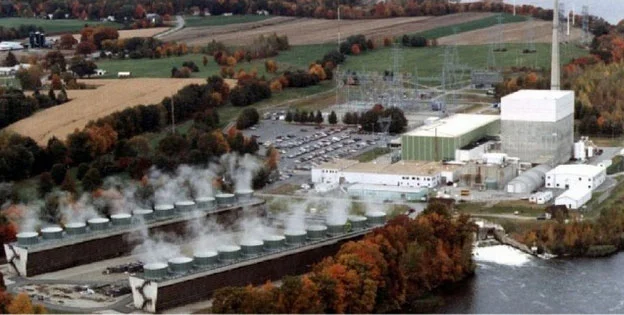
Dillon: Vermont Yankee, like the Japanese plants, was constructed in the 1970s and was built with the same General Electric containment system designed to prevent radiation releases into the environment. Yankee spokesman Larry Smith says the plant has three sources of back-up power: diesel generators, a direct link to a nearby hydroelectric plant, and emergency batteries.
Smith: "We have to sustain electricity in order to maintain the safe shutdown and cooling systems and must have redundant systems to be able to accomplish that."
Dillon: But Gundersen says the batteries in Japan failed after eight hours. That's the same amount of time Vermont Yankee relies on for its emergency batteries.
Gundersen: "So the problem is different. It's not an earthquake and a tsunami. In this case it could be a hurricane and a river flood. But the net effect could be the same: You'd be unable to cool the plant."
Dillon: Neil Sheehan is a spokesman for the Nuclear Regulatory Commission. He says federal regulators will study the Japanese accident to improve safety at U.S. reactors.
Sheehan: There's no question we're going to be looking for lessons learned to come out of this. Whether that would mean increasing battery power or some other measure it's too soon to say."
Dillon: Yankee spokesman Larry Smith says that after the Three Mile Island incident and the Chernobyl meltdown, the industry improved safety. He said this week's events will prompt a similar review. For VPR News, I'm John Dillon in Montpelier.