Fairewinds Report for Southern Alliance for Clean Energy on TVA Bellefonte Plant
/Today the Southern Alliance for Clean Energy and Fairewinds Associates issued a report to the Board of Directors of the Tennessee Valley Authority regarding numerous concerns with the Bellefonte Unit 1 nuclear project. First designed with slide rules back in 1968, Bellefonte Unit 1 is America's oldest nuclear power plant that has yet to generate any electricity. TVA began construction in 1974, mothballed the plant in 1988, and cannibalized the plant for scrap metal between 2006 and 2008. Alarmingly, the Nuclear Regulatory Commission recently allowed construction of Bellefonte Unit 1 by TVA to start again with its 1968 design and its 40-year old weakened foundation and containment. In the video and in its report, Fairewinds identifies seven areas of substantial risk for TVA if it continues to construct this aged facility.
You can view the Full Report Here
and the Report Attachment Here
Transcript:
English
Arnie Gundersen: Hi, I'm Arnie Gundersen from Fairewinds Associates. I was hired by the Southern Alliance for Clean Energy to write a report to the Tennessee Valley Authority Board of Directors concerning a power plant they are planning to construct in Alabama. I have some really serious concerns about the power plant and if it can ever be constructed, let alone operated, that I would like to share with you today. This plant was designed in 1968, that is at the height of the Vietnam War. Engineers used slide rules back then; I know, I was one of them. It was authorized to begin construction in 1974 and between 1974 and 1988, in fits and starts, the Tennessee Valley Authority began to build it. It was 80% complete in 1988 and Tennessee Valley Authority decided to put it in mothballs. What that means in a nuclear plant is that it is put in a protective environment so that rodents do not eat the wires, and so that gasses are maintained to prevent rust, and also, equally important, that the paperwork, the quality of the plant is assured. In 2005, Tennessee Valley Authority said they did not want to do that anymore, they wanted to destroy this plant, cannibalize it, sell it for scrap and move on. They went to the Nuclear Regulatory Commission. The Nuclear Regulatory Commission said sure that's OK. About two years later in 2008, the Tennessee Valley Authority had a change of heart. And they said, we made a mistake; we really should be attempting to build this plant and they went to the NRC. Incredibly, the Nuclear Regulatory Commission said, sure no problem you can construct it again, even though you have cannibalized it for the last two years. This month in August, Tennessee Valley Authority is going to make the decision if they can build this plant. If they do, it will go on line in about 2018. That is 50 years from the time it was initially designed. The plant will be 50 years old before it begins to generate one electron. If it runs for 60 years beyond that, as most nuclear power plants are proposed to do, it will be 110 years old at the time it will be shut down. I think there are some grave concerns that the Tennessee Valley Authority's board of directors needs to look at. I have identified 7 of them in the report that I have presented today. I would like to share those 7 ideas with you in this short video. The first thing I have looked at was this unique design of the Bellafonte unit. It was built by a company called Babcock and Wilcox. Babcock and Wilcox built 8 nuclear reactors worldwide. There are 440 nuclear plants, so 8 divided by 440 means that only 2% of all the power plants in the world are of a design like being proposed for Bellafonte. But it is even more unique than that. The existing 8 Babcock and Wilcox reactors are all what is called a 177 design; it is smaller. This is called the 205 design. It is bigger. This will be the only plant of that design in the entire world. And, oh by the way, the Babcock and Wilcox design is the design that was constructed and operated at Three Mile Island. The second issue is ground water. When this plant was being built in the 1970's, they discovered there was an awful lot of ground water. And anybody who has every put concrete in the ground knows that water sucks out the calcium from concrete and makes it weak. At Bellefonte, they put in pumps. Sump pumps continually pull that water out of the ground and keep the foundation strong. In 2005, when the Tennessee Valley Authority decided to cancel this plant and cannibalize it, they turned the sump pumps off. So for a period of years, ground water has been in contact with that foundation and has weakened the foundation. It is an impossible area to evaluate because you cannot dig underneath a nuclear plant to see how bad the ground water has occurred. But ground water has been eating away at the foundation of that plant because Tennessee Valley Authority made the decision to turn the pumps off. The third area is quality assurance records. A nuclear power plant is only as good as the paperwork that supports whether or not the welds are any good, whether or not the components are any good, whether or not they can be traced to something that is built by a quality assurance vendor. In 2005, that entire system was destroyed. The quality assurance staff was laid off. The records were left in disarray. Without records, the quality assured nuclear plant does not exist. Now that may sound like a small thing, but in fact, that is what makes a nuclear plant, a nuclear plant. It is a little bit like having an AKC dog. You have paperwork to prove that it is an AKC dog. But what if you let your AKC dog loose in the dog park for 6 hours? Could you be sure that the puppies are really AKC? The answer is no. Similarly, when Bellefonte lost control of it's records, it is very, very difficult to go back and determine what is, and what is not, a quality assured piece of material. The fourth area is that the Bellefonte plant was cannibalized. Demolition crews were allowed in, in 2006 and 2007, to rip out major components, nuclear pipe, nuclear valves, and to cut the nuclear steam generators in order to sell the copper on the scrap market. Tennessee Valley Authority recognized after about 2009, that they had a problem. They filed what is called an LER, License Event Report, that said they have lost control of the configuration. That means that they have no idea what is in that power plant anymore. It is a little bit like the book that goes with an airplane. Every airplane has a book and in that book is every single change to that airplane. When Tennessee Valley Authority decided to cannibalize the plant, they threw the book out. And now, as they are looking back and trying to determine exactly what is in that power plant, they have discovered they cannot. This is a serious problem. Construction crews have been ripping the plant apart for years. Controls in the environment, mice eating the pipes, eating the wires, causing electrical short circuits, the wrong material inside the containment, all of these problems have occurred as a result of the unit being cannibalized. The fifth area of concern is the containment vessel itself. It looks substantial from the outside, but in fact, the steel tendons that hold it together have begun to rot. Workers were inside the plant and they heard what they thought was a shotgun. It turned out that it was a steel tendon snapping. As they evaluated that, they determined that other steel tendons had things called sulfites on them and others had water, which was causing rust. Now this containment at Bellefonte is really similar to the containment at Crystal River. We have talked about Crystal River before. A 60 foot long by 20 foot wide crack has developed in the Crystal River containment. It is possible that when they try to fix the Bellefonte containment, they try to retighten it a result of this exploded tendon, that it too, could develop a 60 foot long crack, just like at Crystal River. The Crystal River reactors will be shut down for 5 years to correct that crack and it won't be til 2014 til we know we have got it right. So to move forward on Bellefonte now, is a grave risk, financial risk, to Tennessee Valley Authority because they won't know for sure if that containment can be fixed until Crystal River gets it right and that is not going to be at least until 2014. The sixth area is that there are historical precedents of people trying to start up a nuclear power plant and failing. And Tennessee Valley Authority does not seem to be paying attention to the fact that history is not on their side. The first reactor is Zimmer. Zimmer was built in Ohio, was 98% complete when the utility decided the paperwork, the quality assurance records to make sure that the welds were really nuclear grade welds, were not adequate. The plant was mothballed and then destroyed and turned into a coal plant. The other plant was Washington Public Power Unit 1. That is identical to the Bellefonte Unit. About 8 years ago, the Board of Directors at Washington Public Power faced the same decision that Bellefonte did. And they said, whoa, this is way too risky. As a matter of fact, it was an easier decision to make for the Washington Public Power District because that plant had never been cannibalized. So Washington Public Power and Zimmer threw in the towel because of quality problems in trying to start up a nuclear plant that was long delayed. Bellefonte has been delayed even longer. It will be 50 years old before it ever goes on line. And yet, the Board of Directors at Tennessee Valley Authority is being told by management that it is a prudent expenditure to move forward on the design. I do not think so. The final point I made to the Board of Directors at the Tennessee Valley Authority is that 5 nuclear accidents have occurred after this plant got it's construction permit in 1974. There are lots of lessons that have to be learned and the lessons from Fukushima will not be learned immediately. They will be 4 or 5 or 6 years in the making. Containment issues at Fukushima though, should be known to everybody. Three out of three of the containments have blown up. But yet, the Bellefonte containment has problems already. Tendons have been known to explode. The reactor very similar to it at Crystal River has a crack in it. How can we move forward on the Bellefonte reactors until we have completely learned the lessons from Fukushima? To sum up the report, this plant was built by men and women with slide rules in 1968. The first dirt was moved in 1974. It was mothballed in 1988. It was cannibalized in 2006. And yet the Nuclear Regulatory Commission and Tennessee Valley Authority think it would be a good idea to put it back together and operate it beginning in 2018. It will be 50 years old if it can be constructed on the schedule that Tennessee Valley Authority claims. Then Tennessee Valley Authority proposes to run it for another 60 years. It will be 110 years old, the oldest plant in the world by a long shot, if this plant is allowed to go forward. I recommend to the Tennessee Valley Authority's Board of Directors that they have another look at this. I think there are too many risks, and too many schedule delays, cost overruns and the likelihood of serious operating problems in the future if they continue to build the Bellefonte plant. The full report I have written is on the Southern Alliance for Clean Energy's website. Thank you very much.
Lethal Levels of Radiation at Fukushima: What Are the Implications?
/
https://vimeo.com/27306360
About This Video
TEPCO has discovered locations on the Fukushima plant site with lethal levels of external gamma radiation. Fairewinds takes a close look at how this radiation might have been deposited and how similar radioactive material would have been released offsite.
Video Transcript
[tabgroup][tab title="English"]
Arnie Gundersen: Hi, I'm Arnie Gundersen from Fairewinds and it is Thursday, August 4th.
Two days ago, Tokyo Electric announced some really high radiation levels on the Fukushima site and I wanted to put that into perspective and let you know what I think is happening.
First, Tokyo Electric discovered very, very high radiation in a stack which is used to vent radiation out of the plant and up into the air. The quantity of that radiation was really, really high exposure. It was 10 Sieverts and to convert that over to rems, which I am used to, is a thousand rem. Now, what does that mean?
A thousand rem or more, because the instrument went off scale, a thousand rems, if you were there for less than half an hour, would mean death within a couple of days. Those kinds of exposures cause extensive neurological breakdowns that cannot be reversed medically. So basically, to be near that for any amount of time beyond a couple of minutes, would be a death sentence. What that means is really interesting. This site has been extensively mapped. There is a map that is current that shows many, many hot spots. This hot spot was not discovered until just a couple of days ago. Now that could mean a couple of things. It could mean really poor health physics in that this was missed for 100 days.
I do not think that is the case, but earlier site maps do not show this high concentration of radioactivity in that area. More likely is that this event happened over time, this radiation built up over time, and that is my theory about how the material was deposited. The key is that it occurred in a vent. Now that vent was venting the containment for weeks and months before the radiation was detected.
When you start your car up in the morning, you will see water dripping out of the end of the exhaust pipe. I think that is what happened at Fukushima. The hot humid gasses from inside the containment were going up this stack and where the gasses touched the outside of the stack, they were condensing. It was not just water and hot air, but it also contained lots of cesium. So the cesium and the hot water ran down the outside of the pipe and collected at the bottom. So over a period of time, that concentration got higher and higher and higher. It is likely that the first surveys missed it, because it just was not as high a radioactive source in comparison to all the other radioactive sources that were there.
But over time the concentration went up and up and up as more and more and more water containing cesium came down. It is important to remember that this lethal amount of radiation was found on site, not off site. So that is good. The other piece of that is, it was found in the stack, air was being pulled over that, and up and exhausted into the air for a long time. I think it really speaks to how much radiation was released over the last 140 days. And that this is just a small portion of what was released to the environment.
There is another competing theory: some people think it was blown into that location during the explosion in the first week.
Again, either the health physics practices of measuring that on site were really, really poor, or it was not there in the first week and has gradually built up over time.
Tokyo Electric has found high radiation in the ground in that vicinity and all around the plant.
And in fact has bulldozed some of it under, so that workers could access some of these areas. What that means is that we are going to continue to see over the next 10 years, spikes in radiation on site. First, as pieces that were bulldozed actually come to the surface in the excavations, there will continue to be these enormous radioactive sources that are in the dirt.
And second, when they get into these buildings to actually try to dismantle the plant, they are going to find even higher radiation levels than this one. Remember, at the bottom of the nuclear reactor, the nuclear core has leaked out and is now lying like a pancake on the concrete floor, working it's way down, but probably not through the concrete. That is even much more radioactive than this.
That is why it is going to take Tokyo Electric 10 or 20 years to clean up. This is not something you send somebody in with shovels to shovel the floor. This is going to have to be done robotically and it is going to take a long, long time.
I will keep you informed as more develops.
One last thing, I wanted to say that I made a mistake in the last video at the University of Vermont. It is Finland that has the waste repository. In my presentation, I said Sweden. My apologies to the Finns for mistaking your country.
Thank you very much.
[/tab][tab title="日本人"]
福島原発での致死レベルの放射線:その意味するところは何か?
東京電力(TEPCO)は福島第1原発敷地内で致死量のガンマ線が発生している箇所を発見しました。フェアウィンズは、放射性物質がどのような経緯でこの場所に堆積されたのか、また、同様の放射性物質が敷地外に放出された可能性について、考察します。
こんにちは。フェアウィンズのアーニー・ガンダーセンです。今日は8月4日木曜日です。2日前、東京電力は非常に高レベルの放射線が福島第1原発で検出されたと発表しました。この事象を全体に位置づけ、福島原発で何が起きているかについて私の考えをお伝えしたいと思います。
まず、東京電力が非常に高レベルの放射線を発見したのは、放射性物質を空気中に放出するための排気塔です。測定された放射線量は並外れて高く、10シーベルトでした。私はレムに慣れているのでそれに換算すると、1,000レムです。
これはどれくらいの数値でしょうか。1,000レム、いや測定器が振り切れたのでそれ以上ですが、これはその近くに30分居ただけで、数日で死に至るレベルです。このような被曝をすると広範囲にわたって神経細胞が破壊され、医学では修復できません。近くに数分以上いたら、死刑宣告を受けるようなものです。
興味深いのは、原発の敷地内についてはこれまでに詳細な地図が作成されていることです。最新版を見ると、ホットスポットが非常にたくさんあるのがわかります。ところが今回のホットスポットは、2日前まで発見されませんでした。
理由はいくつか考えられます。たとえば、保健物理学(放射線の安全な取り扱いを研究する実践的研究分野)の調査がひどくお粗末だったために、この100日間のあいだ見逃されていた可能性です。私はそうは思いませんが、とにかく、古い地図を見てもその場所に高線量の地点があると記されていないのは事実です。
もっと可能性が高いのは、時間の経過とともに放射性物質が蓄積したことです。私はそう考えています。
重要なのはこれが排気塔で見つかったことです。今回の高レベル放射線が検出されるまで、この排気塔は 何週間も何ヶ月ものあいだ格納容器内のガスを逃がしてきました。朝、車のエンジンをかけると、排気管から水が滴り落ちることがあるのはご存知でしょう。福 島で起きたのはそういうことだと思います。格納容器から出るガスは高温で多量の水分を含んでいます。ガスは排気塔を上へとのぼっていきますが、排気管の外 側にガスが触れると、気体が凝縮して液体になります。
排出されるのは高温の水蒸気と高温の水だけではありません。多量のセシウムが含まれています。セシウムと高温の水が配管の外側を伝わって落ち、下に溜まった。時間とともにどんどん溜まって濃度が高まっていきました。
最初の調査のときには、まだほかの放射線源と比べたら線量が高くなかったために見落とされた可能性があります。しかし、時とともにセシウムを含んだ水がさらに流れ落ちてくるにつれて、その濃度はどんどん高まっていきました。
覚えておいていただきたいのですが、この致命的なレベルの放射線が見つかったのは敷地外ではなく敷地内です。これは喜ぶべきことです。ですが、その排気塔からは長期にわたって排気が行なわれていました。実際に過去140日間でどれだ け高レベルの放射線が放出されてきたのかを今回の発見が物語っています。しかもそれは、環境中に放出された全体量のごく一部でしかないのです。
別の説もあります。事故後一週間のあいだに起きた爆発で吹き飛ばされたものが、あの場所に落ちたというものです。これもやはり保健物理学の調査がよほどお粗末だったためか、最初に調査したときにはなかったのにしだいに蓄積していったかのどちらかです。
東京電力は原発敷地内のいたるところで高線量のがれきを確認しています。作業員のアクセスを容易にするために、その一部はすでにブルドーザーでどかして埋めてあります。ということは、今後10年間にわたって、敷地内ではときおり急激な線量の上昇が起きることになります。ひとつには、埋めたがれきを掘り出すとき。掘り出す作業が続くあいだは放射線源が存在し続けることになります。
もうひとつは、実際に原子炉を解体するために人が建屋のなかに入るときです。今回以上に高い放射線量 に直面することになるでしょう。思い出していただきたいのは、炉心が今や原子炉を突き抜けて、パンケーキのようにコンクリートに張り付き、下へ下へと落ち ていっていることです。まだコンクリートを突き破ってはいないと思いますが。その炉心の放射線量は今回発見されたレベルの比ではありません。だから東電は 原子炉をきれいにするまでに10年から20年かかると発表しているわけです。
この作業は、中に人を送り込んで床をシャベルで掘れば済むというものではありません。ロボットにやらせる必要がありますので、非常に長い時間がかかりま。
この件に関して進展があればまたお知らせします。
最後にひとつお詫びがあります。前回のバーモント大学からのビデオに一箇所間違いがありました。最終 処理施設が建設中なのは「フィンランド」です。プレゼンテーションのなかで私は間違ってスウェーデンと言ってしまいました。フィンランドの皆さん、皆さん の国を間違えてしまって申し訳ありません。
ありがとうございました。
[/tab][/tabgroup]
Nuclear Power 101: Fairewinds Examines the Fundamental Advantages and Disadvantages of Splitting Atoms to Boil Water
/About This Video
Included in this presentation and PowerPoint is a discussion of how nuclear power plants work, how to cool a reactor during an accident, the effect of hot particles when inhaled, and concerns involving the long-term storage of nuclear waste. This presentation took place at the Nuclear Power Conference held at the University of Vermont July 23, 2011.
Associated Material
New Video of Scientist Kaltofen Presenting to American Public Health Association
Arnie Gundersens' Expert Witness Testimony on Radiological Materials at Indian Point
/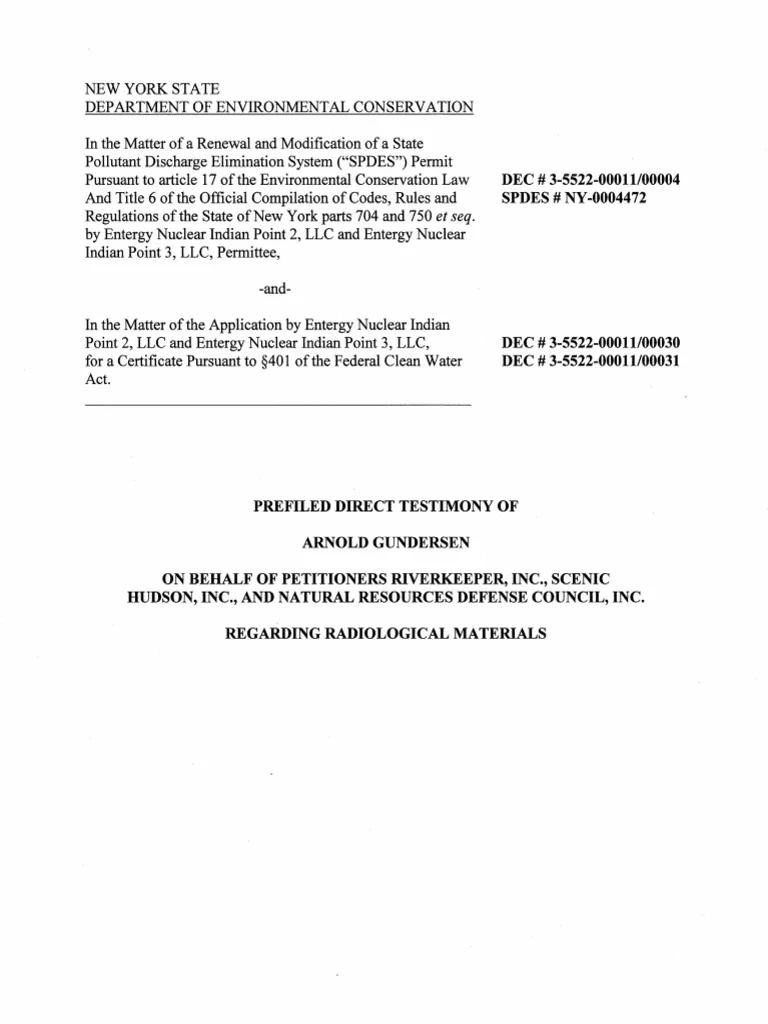
Profiled Direct Testimony of Arnold Gundersen on Radiological Materials at Indian Point, July 22, 2011, Arnold Gundersen
Read MoreEx Japanese Nuclear Regulator Blames Radioactive Animal Feed on "Black Rain"
/
https://vimeo.com/26651670
About This Video
While many radioactive cattle have been discovered large distances from Fukushima, what is more important is where their feed is coming from. "It's not only about the radioactive cattle in Fukushima Prefecture; its also about the radioactive straw the cattle eat that was grown elsewhere". Straw found 45 miles from Fukushima is highly contaminated with radioactive cesium, which is an indication that radiation has contaminated large portions of Northern Japan. More than half a million disintegrations per second in a kilogram of straw are comparable to Chernobyl levels. This proves that the American Nuclear Regulatory Commission was correct when it told Americans to evacuate beyond 50 miles and that the Japanese should have done the same. An Ex-Secretariat of Japan's Nuclear Safety Commission blames this contamination on "Black Rain". Rather than minimize the information the Japanese people receive, Gundersen suggests minimizing their radiation exposure."
Video Transcript
[tabgroup][tab title="English"]
Arnie Gundersen: Hi, I'm Arnie Gundersen from Fairewinds and it is Tuesday, July 19th.
Today, I plan to talk about the condition of the reactors at Fukushima. And more importantly, the radiation that has been detected throughout Japan, not just on the site. And finally, I want to talk about a condition that the Japanese are beginning to call Black Rain.
The first thing is the condition of the site itself. All 3 Fukushima reactors that were running, I, II and III, and the fuel pool on Unit 4, continue to release radiation. Now, you do not see it in the day because the days are warm now, but you do see it at night. I have gotten many, many emails about this, where people think that the site is blowing up. In fact, it is steam coming out of these reactors and hitting cold air from the Pacific. So they continue to release radiation. But most of the radiation from Fukushima was released in March and in April. At this point, there is a lot less radiation every day than there was in March and April. About 90-95% of the radiation from Fukushima was released in the first 6 weeks of the accident. While it continues to release radiation, there is nowhere near as much on a daily basis. On the other hand, Fukushima may be continuing to release radiation for a long time.
The Japanese are building large tents to put over each of these reactors. The first tent is in fabrication now and it will cover reactor 1, and then they will move to reactor 2, and reactor 3, and finally reactor 4. Those tents are designed to prevent the steam from getting out and to collect it as water and treat it. So beginning in September, most of the airborne radiation will be eliminated from Fukushima, at least Unit 1. More and more though, we will wind up with the contaminated ground water and the contaminated liquids that are on site. There is nothing in the foreseeable future to eliminate those. As a matter of fact, the Japanese announced that it is going to be 10 years before they begin, begin to remove those cores from the bottom of the containment. There is no technology right now to remove them. Remember they have melted through the nuclear reactor and they are lying on the floor of the nuclear containment.
At Three Mile Island, they had melted onto the bottom of the reactor, but not through the reactor. So this is brand new. It is sort of like trying to peel an egg off the bottom of a frying pan. If it is cooked too long, it is a very, very complicated and difficult process. And that is what we are facing at Fukushima in the long term clean up. So in the meantime, there will be an awful lot of liquid radioactive waste that will have to be processed for 10 or perhaps 20 years.
Well, in my mind, the more concerning thing is the information that has been coming in from off site lately. Some friends of mine are biologists that had worked at Chernobyl and went to Japan to do some scientific work over there. They went anticipating things were going to be bad. I got a call this week from them and they said that things are really, really bad. So these are hardened scientists that are used to dealing with radiation and they believe that conditions at Fukushima are much worse than they had thought.
There is some corroborating evidence that has come in on that. The first is that mushrooms between 30-40 miles from the reactor, are found to be contaminated well in excess of what the Japanese are allowing. The interesting part of that is that the mushrooms were grown indoors. So how can a mushroom grown indoors exceed the radiation standards that the Japanese have set? It is a major concern and again, it is 35 miles from the accident.
The second piece of corroborating evidence, is that cattle have been contaminated throughout the Fukushima Prefecture and beyond. In the last week, first it started that 8 cows were contaminated and then it became 40 cows and now it is over 130 cows that are contaminated, and I am sure that number will go up as time goes on. Now there are a couple of interesting things here. First is that the cows were 30-40 miles from the reactor and their cesium levels are well in excess of anything anyone has ever approved for human consumption.
When the cows got to market, the Japanese did not sample the meat, they rubbed the hide of cow to see if there was any contamination. And based on rubbing the hide of the cow, they released it to market. It was only after that, that it was discovered that the meat was contaminated. That is not an acceptable way of measuring beef. But the more important issue here is, how did the cows pick up that contamination when everyone thought the cows were being fed silage, in other words, straw that had been saved from before the accident?
It turns out that the Japanese use the stalks of rice to feed their cows. And farmers out at 45 miles and beyond, were cutting their rice stalks down and shipping it in to the farms that were inside the Fukushima Prefecture. The straw was contaminated to 500,000 disintegrations every second, in a kilogram of straw. Now this is cesium. It has got a 30 year half life. But 30 years from now, it is still going to be disintegrating at 250,000 disintegrations per second. And 30 years after that at 125,000 disintegrations per second. That is what this term half life means.
This occurred out at 45 miles. You will recall that the Nuclear Regulatory Commission suggested evacuation out beyond 50 miles. This appears to indicate that the NRC was right. The Japanese should have evacuated their population out beyond 50 miles and instead stopped at around 12 – 18 miles.
This contamination then has spread beyond the Fukushima Prefecture. Yet, the Prefecture itself seems to be the only place the Japanese are worried about this radioactive exposure.
The last thing I would like to talk with you about today, is what happens outside the 50 miles that we have just been talking about. It is already pretty clear based on the radiation in the straw that we have discovered that radiation, even out as far as 50 miles, is as high in some areas as Chernobyl was.
Well, what about further? Let's take a look at Tokyo and I am concerned there too. First, the sewage treatment plants in Tokyo have contaminated their sewage sludge. Normally, that material is used in building construction material. But it is so radioactive that it has to be stored outside under tarps, until someone can figure out a way to get rid of it.
The second thing is, a Japanese gentleman sent me a lab report. This person took it into his own hands to pay for a lab to analyze data on a street near a playground in Tokyo.
Here is the lab report. It shows that there are 53,000 disintegrations per second in a kilogram, that is 2.2 pounds of material, on the side of a street near a playground in Tokyo.
This person was so concerned that they went to the mayor of that town and the mayor said, I am not worried about it. Here is a citizen that with his own money, paid for a lab report and could get nowhere with his local government.
Well, there is another piece of data. And that comes out of the National Cancer Center hospital near Tokyo as well. It has been on their website since a couple of days after the accident. The report shows that on March 24th, that is 9 days after the accident, the radioactive background outside the hospital was 30 times higher than the radioactive background inside the hospital. There was deposition of hot particles on the soil. And it was significant enough to increase the amount of radiation that the detectors were picking up by a factor of 30. Now a national cancer hospital clearly knows how to measure radiation, so these are experienced scientists.
The last report I want to share with you is every day, I get an email from a prominent Japanese physicist named Dr. Glen Saji. He was their secretariat of the Nuclear Regulatory Commission in Japan. He wrote two days ago, this. And it has to do with the straw that has been discovered near Fukushima.
"I believe it is due to storing straw in a field at the time the plume passed by during the first week of the accident, in particular, due to the Black Rain."
Now Black Rain is not a term I am sure he uses lightly. But it clearly was experienced in Japan after the accident. What he is referring to there is clouds of radioactive hot particles depositing everywhere in northern Japan.
Well, the Japanese are resourceful people, as evidenced by their world cup win on Sunday. But they need to know the magnitude of the problem they are facing in order to handle it correctly. Rather than limit the information, it is important that they limit the radiation.
Thank you very much and I will get back to you.
[/tab][tab title="日本人"]
元原子力安全委員会事務局の専門家、家畜飼料を放射性物質で汚染したのは「黒い雨」である、と発言
福島第1原発から遠く離れた場所の家畜から放射性物質が発見されている問題で、より重要なのはその家畜の飼料がどこから来たのか、ということです。福島県内の汚染家畜だけではなく、家畜に与えられたわらが別の場所で収穫されそれが汚染されていた、ということも問題なのです。
福島第1原発から45マイル(72キロメートル)離れた場所で発見されたわらは、放射能セシウムで高度に汚染されています。このことは、放射能は北日本の広い範囲を汚染しているということを示すものです。わら1キログラム当たり毎秒50万回以上におよぶ原子核の崩壊(50万ベクレル)は、チェルノブイリの放射能レベルに匹敵するものです。米国原子力規制委員会が自国民に80キロメートル圏外に避難すること、と言っていたのが正しかったということ、および日本国民も同様にすべきであったことを、証明するものです。日本の元原子力安全委員会事務局の専門家は、この汚染は「黒い雨」によってもたらされた、と言っています。ガンダーセン氏は、日本国民が知るべき情報を制限するのではなく、むしろ放射能被曝こそを最小限に制限すべきである、と指摘しています。
こんにちは。フェアウィンズのアーニー・ガンダーセンです。今日は7月19日火曜日です。今日お話したいのは、まず福島第一原発の原子炉の現状につ いてと、もっと重要な問題ですが放射性物質が福島だけでなく日本中で検出されている件について、そして日本で「黒い雨」と呼ばれ始めているものについてで す。
まず原発自体の現状からです。1号機から3号機までのすべての原子炉と4号機の燃料プールからは、放射性物質が放出され続けていま す。日中は暑いために放射性物質の放出を目で見ることはできませんが、夜になれば見えます。これについては、原子炉が爆発したのではないかとたくさんの メールをもらっていますが、あれは原子炉から立ち上る蒸気が太平洋からの冷たい空気にぶつかったものです。いずれにせよ放射性物質の放出は続いています。
とはいえ、福島からの放射性物質のほとんどは3月と4月に放出されました。現時点では、一日あたりの放出量は3月や4月よりもはるかに少なくなっています。福島からの放射性物質の約90~95%は事故後最初の6週間で放出されました。今も放 出は続いているとはいえ、日々の放出量で見たら当初とは比べ物になりません。その一方で、福島からは今後も長期にわたって放射性物質が放出され続けるおそれがあります。
日 本では大きなテントを作って各建屋にかぶせる計画を立てています。現在は最初のテントを製造中で、1号機にかぶせる予定です。それから順次2号機、3号機 と移って、最終的には4号機にもテントをかぶせます。テントをかぶせる目的は、蒸気が外に出るのを防ぎ、蒸気を水にして集め、その水を処理することにあり ます。これにより、9月以降は福島から空気中への放射性物質の放出はほとんどなくなります。少なくとも1号機からは。
しかし、放射性物質 の多くは汚染された地下水と現場の汚水となり、当分のあいだはそれを除去する手立てがありません。それどころか日本政府は、格納容器の底に落ちた炉心を取 り出す作業に「着手する」までにあと10年かかると発表しています。今はまだ炉心を取り出す技術が存在しないのです。思い出していただきたいのですが、燃 料は原子炉を突き抜けて「メルトスルー」して格納容器の底に落ちました。スリーマイル島の事故のときは、燃料が溶けて原子炉の底に落ちましたが、メルトス ルーはしていません。ですから今回のような状況には前例がないのです。
この作業は、フライパンの底にこびりついた卵を剥がすようなもので す。加熱時間が長ければ、剥がすのはそれだけ難しくなります。私たちが直面しているのはそういう状況です。原子炉をきれいにするのには長い時間がかかりま す。また、それと並行して膨大な量の放射能汚染水の処理も進めなければなりませんが、これには10年か、場合によっては20年かかるかもしれません。
私 がそれ以上に心配しているのは、最近になって原発以外の地域から聞こえてくる情報です。私の友人で、チェルノブイリでも仕事をした生物学者数名が、調査の ために日本に行きました。彼らは日本がひどい状況にあることは想像していましたが、今週私に電話をかけてきて「状況は本当に本当に深刻だ」と話しました。 彼らは筋金入りの科学者で、放射線の問題を扱うのにも慣れています。にもかかわらず、福島の状況は彼らの予想をはるかに超えるひどさだと言うのです。
そ の言葉を裏づける証拠も得られてきています。最初はシイタケです。原発から50~60kmくらい離れた地域で、日本の基準値を大きく超える放射性物質が検 出されました。興味深いのは、そのシイタケが「屋内で」栽培されていたということです。なぜ屋内で栽培されたシイタケから基準値を超える放射性物質が検出 されるのでしょうか。これは非常に憂慮すべき状況です。もう一度言いますが、原発から55km程度離れた地域で起きたことなのです。
2つ 目の証拠は、福島県各地と福島県外で汚染牛が見つかっていることです。最初は8頭の牛に汚染が確認されたと伝えられ、やがてそれが40頭になり、130頭 以上になりました。この数は時間とともに間違いなく増えると思います。[1400頭以上です。]この問題でいくつか注目したいのは、まず汚染牛が原発から 50~60kmくらい離れたところで見つかっていること。そして検出されたセシウムの量が、これまでに定められた食品のいかなる基準をもはるかに上回る高 レベルだったことです。
汚染牛が売られるとき、日本政府は肉のサンプリング検査をしませんでした。牛の皮をこすった上で外側から被曝の有 無を確認しただけです。被曝が確認されなかったので市場で売られました。売られたあとでようやく肉の汚染が明らかになったのです。このようなやり方は、牛 肉の汚染を調べる方法として容認できるものではありません。
ですがもっと重要な問題は、牛はどこで放射性物質を取り込んだのかという点で す。アメリカの皆さんは牛の餌にはサイレージ、つまり原発事故前に貯蔵しておいた牧草が与えられると思うでしょうが、日本では牛の餌に稲のわらを使ってい るのです。70km以上離れた農家が稲を刈ってできたわらを、福島県内の農家に出荷していたのです。その稲わらは、1kg当たりの崩壊数が毎秒50万個 (つまり50万ベクレル)でした。これはセシウムですので半減期は30年です。つまり、今から30年たってもまだ25万ベクレルの放射能があるということ です。さらにその30年後に12 5000ベクレルになる。それが半減期という言葉の意味です。
これは原発から約70km離れた場所での 話です。米国原子力規制委員会(NRC)が当初、原発から半径80km圏内のアメリカ市民を避難させるべきだと提言したのを覚えているでしょうか。どうや らNRCは正しかったようです。日本政府は20km~30kmで止めずに、80km圏内の住民を避難させるべきでした。放射能汚染は福島県外にも広がって います。にもかかわらず、日本政府が放射線被曝を心配しているのは福島県だけについてのようです。
今日最後にお話したいのは、その 80km圏外で何が起きているかです。汚染された稲わらが見つかったことからもすでに明らかなように、80km圏外であってもチェルノブイリ並みに汚染さ れている地域が存在します。たとえば東京[首都圏]はどうでしょうか。私は東京についても心配しています。ひとつには、東京の汚水処理施設で放射性物質に 汚染された汚泥が見つかっているからです。通常であれば汚泥は建設用資材に加工されますが、今回は放射線レベルがあまりに高いため、処分方法が決まるまで は防水シートをかけて屋外で保管するしかありません。
そしてもうひとつ、ある日本人の方が私宛てに検査報告書を送ってくれました。東京 [首都圏]の公園近くの道で採取した土を、この方が直接研究所に持ち込み、自分でお金を払ってデータ分析を依頼したのです。これがその報告書です。東京の 公園近くの土から、キロ当たり約53,000ベクレルの放射能が検出されています。この方は非常に心配になったので、市長を訪ねました。ところが市長の返 事は「私は心配していない」というものでした。
一市民が、身銭を切って研究所に検査を依頼したにもかかわらず、市に訴えてもまったくらちがあかなかったのです。
さ らにもうひとつデータがあります。やはり東京の近くにある国立がん研究センターの病院からです。これは病院のウェブサイトに事故の数日後から掲載されてい るデータです。この報告書を見ると、事故から9日後の3月24日に計測された屋外の背景放射線量が、屋内の背景放射線量の30倍に達しています[表を見る と実際は約36.6倍]。ホットパーティクル(高放射能粒子)が土に降り、それによって線量が高まったため、測定器が検知して屋内の30倍という数値を記 録したのです。国立がん研究センターですから、線量を測る方法は間違いなく心得ているはずです。ですから熟練した研究者によって計測されたデータです。
最 後にもうひとつレポートをご紹介します。私は毎日、日本の著名な物理学者であるグレン佐治博士[おそらく、佐治悦郎さんと思われる]からメールをもらいま す。佐治博士はかつて原子力安全委員会の事務局を務めていました。彼は2日前のメールでこう書いています。汚染された稲わらが見つかった件についてです。 「汚染の原因は、事故後一週間の間に放射能の雲が通過したときに稲わらを屋外で保管していたためであり、とくに『黒い雨』のせいであると考えます」 佐治博士が「黒い雨」という言葉を軽々しく使うとは思えません。事故後の日本に「黒い雨」が降ったのは明らかです。つまり、博士が言うのは、高放射能の雲が日本の北半分の至る所にホットパーティクルを落とした、ということなのです。
日本人は臨機応変な国民です。そのことは、日曜日のワールドカップサッカーの勝利からもわかります。しかし、日本人は自分たちが直面している問題の大きさに気づく必要があります。そうでなければ適切に対処することはできません。情報を制限するのではなく、放射性物質を制限することが重要です。
ありがとうございました。またお目にかかりましょう。
[/tab][/tabgroup]
NRC Recommends Safety Upgrades
/
About This Interview
Host: A federal review prompted by the recent Japanese nuclear disaster recommends that plants such as Vermont Yankee adopt new safety upgrades. Vermont Yankee says it doesn't yet know how much the changes will cost. VPR's John Dillon reports.
Dillon: The earthquake and tsunami that struck last March disabled emergency generators and left the Japanese reactors without power from the electric grid.
Sheehan: "So they had no ability to get power to the pumps to get the water in to the fuel in the reactor covered and cooled."
Dillon: Neil Sheehan is a spokesman for the Nuclear Regulatory Commission.
Sheehan: "So that is going to be a primary focus: How do we increase the ability to get power to these sites."
Dillon: An NRC task force says that in light of the Japanese disaster, U.S. plants should have systems in place to keep fuel cool for 72 hours. The task force also made specific recommendations for U.S. reactors, such as Vermont Yankee, that share the same design as the stricken Japanese nuclear power plants. The commission says vents need to be strengthened so the hydrogen gas can be released before it explodes. Neil Sheehan:
Sheehan: "Essentially the issue is if they have melting of fuel, it can lead to production of hydrogen. And as we saw at Fukishima Dai'ichi, that led to explosions."
Dillon: Vermont Yankee spokesman Larry Smith says the plant already installed hardened vents - a modification he says was made in the 1980s. But Sheehan says the Japanese reactors had similar vents - but that they didn't work when they were supposed to. So the NRC wants the owners of reactors like Yankee to show that the vents can operate in the extreme heat and pressure of an accident.
Sheehan: "They have these vents. What can they do to ensure that they're going to be available and properly functioning during an event like this."
Dillon: Nuclear engineer Arnie Gundersen is a frequent critic of the Yankee design. He says the vents were installed because the reactor containment itself was inadequate. But opening the vents, he says, defeats the purpose of the containment structure itself, which is designed to contain radiation.
Gundersen: "The industry's position is that letting the radiation out is better than blowing the containment up. And my opinion is that neither are acceptable and that the containment is the problem, and that it either needs to be fixed - strengthened - or shut down."
Dillon: Gundersen says all the changes recommended by the NRC will cost Yankee about $100 million. That's on top of other expensive repairs needed if the plant operates for another 20 years. Gundersen has a prediction about Entergys Vermont Yankee's response:
Gundersen: "I think if Vermont Yankee is allowed to operate, the net effect will be it'll be too costly to make the repairs and Entergy will make an economic decision to shut it down."
Dillon: Entergy is still committed to keeping the plant operating for another 20 years. Yankee spokesman Larry Smith says the industry wants to work with the NRC to implement the changes. He says it's too early to come up with an accurate cost estimate. For VPR News, I'm John Dillon in Montpelier.
Why Fukushima Can Happen Here: What the NRC and Nuclear Industry Dont Want You to Know
/
https://vimeo.com/26231562
About This Video
The well-known safety flaws of Mark 1 Boiling Water Reactors have gained significant attention in the wake of the four reactor accidents at Fukushima, but a more insidious danger lurks. In this video nuclear engineers Arnie Gundersen and David Lochbaum discuss how the US regulators and regulatory process have left Americans unprotected. They walk, step-by-step, through the events of the Japanese meltdowns and consider how the knowledge gained from Fukushima applies to the nuclear industry worldwide. They discuss "points of vulnerability" in American plants, some of which have been unaddressed by the NRC for three decades. Finally, they concluded that an accident with the consequences of Fukushima could happen in the US.
With more radioactive Cesium in the Pilgrim Nuclear Plant's spent fuel pool than was released by Fukushima, Chernobyl, and all nuclear bomb testing combined. Gundersen and Lockbaum ask why there is not a single procedure in place to deal with a crisis in the fuel pool? These and more safety questions are discussed in this forum presented by the C-10 Foundation at the Boston Public Library.
Special thanks to Herb Moyer for the excellent video and Geoff Sutton for the frame-by-frame graphics of the Unit 3 explosion.
Video Transcript
[tabgroup][tab title="English"]
David Lochbaum: Good evening. I appreciate C10 for hosting this event and you all for turning out.
For those of you who do not know me, my name is David Lochbaum.
For those of you who do know me, my name is also David Lochbaum. For some reason it works out the same either way.
Arnie and I are going to present what happened at Fukushima and why those vulnerabilities plague U.S. reactors, Seabrook, Pilgrim, Vermont Yankee. The type of reactor really did not matter. The primary cause at Fukushima would have knocked down any one of our plants. So it is not a direct problem with GE reactors or boiling water reactors, it is a problem with nuclear reactors that we need to address.
There were six reactors at Fukushima. Three of them were operating at the time; three of them were shut down for scheduled refueling at the time.
Boiling water reactor on the left hand side. The nuclear fuel was inside a reactor vessel. The heat from splitting atoms is used to warm water that is flowing upwards through the reactor core. That heat causes the water to boil. The steam leaves the reactor vessel and is carried through piping to a turbine that is connected to a generator. The spinning turbine generates electricity that goes out on the wires to consumers down the line. The steam leaving the turbine is then passed into a condenser, a large metal barn basically. In this case, seawater was passed through tubes inside that condenser to cool the steam down, convert it back into water. The condensed water was then sent back to the reactor and used over and over again to remove steam, make steam and spin the turbine. The warmed seawater was returned to the Sea of Japan (Pacific Ocean) for further use.
This is called a simplified diagram but looks a little more complicated than the last one. The red portions show the steam lines going from the reactor vessel to the turbine, as the earlier, even simpler diagram showed. The light blue lines, cyan lines, show that the water going back from the condenser to the reactor vessel. This will come in more important in just a second . . .
When the earthquake occurred, these reactors -- because Japan is kind of susceptible to earthquakes -- those reactors automatically shut down within seconds when they detected ground motion caused by the earthquake. So within seconds of the earthquake, sensing that, the control rods inserted into the nuclear reactor core stopped the nuclear chain reaction and turned the reactors off. About a minute later, the turbine tripped. There was not enough steam going through the turbine any more so the turbine tripped. The earthquake knocked out the electrical grid, the normal source of power to the plant. When the turbine tripped, the generator tripped, that meant it was not producing any electricity for the plant either. So the earthquake and the turbine trip took away the normal source of power for the plant.
The red line shows the steam line going from the reactor vessel to the first valve that is inside the reactor containment building. The loss of power caused those valves to fail-safe. The fail-safe position for those valves was closed, which meant the steam was no longer going down the pipe, or at least no further than that closed valve.
In that case, you have steam still being produced by the decay heat being put off by the fuel in the reactor core, so you had to have something to deal with that energy that is still being produced. At Unit 1, which was different than Units 2 & 3, Unit 1 was the oldest of the reactors at Fukushima. That plant had what was called an isolation condenser, which is shown on the left. It is a big tank of water that has tubes that flow through it. Actually there are two tanks of water, each with tubes flowing through it.
Shortly into the accident, the little valves circled in yellow automatically opened because the pressure inside the reactor vessel was rising too high to protect the reactor vessel from bursting like a balloon or the piping from bursting due to too much pressure. The high pressure automatically opened that valve, allowed steam from the reactor to flow through the tubes inside this large tank of water, where it got cooled back down into water and then gravity drained that water back into the reactor vessel. So that isolation condenser controlled the pressure inside the reactor vessel and also controlled make up. There is no steam leaving. It was all being reused, so the amount of water in the reactor core reactor vessel remained the same.
The operators about 11 minutes later turned that system off. As in Three Mile Island, you turn off emergency safety systems, you are basically toying with the Devil and the Devil wins.
But they turned the safety system off. They closed that valve 11 minutes after it opened because the temperature of the water inside the reactor vessel was cooling down at 300 degrees an hour. It is a big piece of metal and there are limits on how fast it heats up or cools down, because you want to control the expansion and contraction, so it does not break. It was cooling down faster than they wanted it to, well above the 100 degree an hour limit, so they turned the safety system off. When they did that, they lost the way to handle the pressure buildup inside the reactor vessel, so the reactor vessel finds it’s own way. It uses some safety relief valves that discharge the steam to a different place that is called the torus or suppression chamber. In this design it is a large metal ring, looks like a donut made out of metal, nuclear sized, that holds about 2 1/2 million gallons of water. The steam from the reactor vessel is then routed down into this large body of water.
That is controlling the pressure, but with no make-up, and there is absolutely no make-up for this type of plant. Ultimately, as you discharge that steam into the torus, the water level inside the reactor vessel kept dropping. As the steam left, there was less and less water inside the reactor vessel. It started out with about 15 feet of water, normal water level to where the top of the core was. It was just a matter of time before . . . I call it the nuclear wick. They lit the wick on a nuclear candle. It just took time for that to melt down.
During normal operation, the temperature inside the fuel pellet is up to about 1600 degrees. That heat drops as it moves through the gap between the fuel pellets and the fuel rods. Fuel rods are 15 foot long hollow tubes of metal with fuel pellets stacked in them like peas in a pod and welded from top to bottom. As the temperature inside the fuel goes through that gap, goes through the metal cladding and reaches the water, it drops down to about 560 degrees on the surface of the fuel cladding. As the water level dropped lower and lower, the water was doing less and less cooling, less and less removal of that heat. As a result, the fuel pellets warmed up, the fuel cladding warmed up. As the temperature of the fuel cladding exceeded 1800 degrees Fahrenheit, you start getting a chemical reaction between the water the zirconium metal that produced a large amount of hydrogen. A very large amount of hydrogen was created.
Hydrogen has a lot of good properties, but it also has a lot of negative properties if anybody remembers the Graf Zeppelin, the Hindenburg. When hydrogen ignites, it burns very rapidly. There is a system installed at these plants to control that. There is a lot of talk about a hardened vent. This diagram shows that hardened vent. It is located on the left hand side of the screen. The turbine is on the right hand side. The little building that surrounds what looks like an inverted light bulb is the reactor building. The way it was supposed to work, the way it was designed, as steam carried hydrogen down into the torus, the hydrogen bubbled up through the water and collected in the air space above the water in the torus. There is a valve that can be opened that allows that air space which includes hydrogen and radioactive materials, to go out through an 8 inch diameter pipe, directly out to an exhaust in the roof of the building. It passes through the reactor building, but it is supposed to be on the inside of that pipe where it goes out through the exhaust, the chimney basically.
It did not work for some reason. The operators mainly opened that valve because the valve is motor controlled. And without electricity, a motor operated valve does not move. So they had to go down and crank open that vent in an area that was very hot, very dark and very nasty. It took them awhile to do that. It took longer than they would have liked.
During normal operation, the yellow circle surrounds a filter system that is used to filter the radioactive releases from the plant. There is a charcoal filter and a HEPA filter that reduces the amount of radioactivity that is vented out the stack.
During accident conditions, there is another filter system that is supposed to do the same thing for anything that collects inside the reactor building. However, both of those systems need electricity to work. Neither of those systems work when you do not have electricity.
For reasons unknown, but hard to deny, the hydrogen got into the reactor building and then blew up. Not once, not twice, not three times, but four times. I am not sure exactly how it happened in any of those times. It was not supposed to be in those buildings. There are no detectors to detect hydrogen in those buildings, other than missing walls and roofs perhaps.
But at some point, on Saturday morning, March 12th, Unit 1 blew up. The hydrogen collected and detonated, blew out the sides of the building and the roof. The schematic on the right shows the Hatch Plant in Georgia, which is very similar to that plant and many other plants in the United States. Up to the point of the spent fuel pool, the concrete walls withstood the hydrogen explosion. From that point on, it is a sheet metal siding, not unlike a Sears storage shed. I have nothing against Sears or their storage sheds, but it is really not a place to store nuclear waste.
The picture on the left proves that out. That is Unit 1 reactor building at Fukushima, with the upper part of the walls and the roof taken away by the explosion.
Arnie Gundersen: Unit 1 was the oldest plant and it had this isolation condenser that Dave was talking about.
Let me step back a little bit though. When uranium splits, 95% of the heat comes from the splitting of the uranium. But 5% comes from these pieces that are left over that are called radioactive daughter products. Now 5% does not sound like a lot, but each of the reactors at Fukushima was producing around 2 1/2 million horsepower. So 5% of that is still 125,000 horsepower of heat that you had to get rid of after the plant was shut down. Those horses were in a room that was 12 by 12 by about as high as this. So put 120,000 horses in a room like that and you can imagine that they are going to turn out a lot of heat that has to be dissipated. Unit 1 had the isolation condenser which is really interesting. It is almost identical to a Model T, the way the Model T was cooled. The model T had a gravity fed cooling system on it.
Unit 2 and 3 had something called the RCIC Turbine, and that is the first piece of information here. This is kind of neat. It uses the steam from the nuclear reactor to spin a turbine. Just like in Unit 1, there is all this heat producing steam. The isolation valves were closed, so the steam was not going anywhere. And the turbine spun, which in turn, turned a pump, so there was no electricity required to turn that pump. It was using the decay heat steam which is kind of neat, except, you guessed it, the valves that worked that system required electricity. So even though the pump and the turbine would have gone on for days, when they lost the control of the valves, the RCIC Turbine stopped. Next slide.
So what does that do? The fuel gets hot. This is up on our website. There is a friend of mine . . . I had a piece of nuclear fuel, empty, that I was given when I was in the industry. It is made of a thing called zircaloy. Zircaloy is really unique in that it does what Dave said, it can spontaneously oxidize. Basically it burns when water is in touch with it at temperatures over 1800, 2000 degrees. What my friend and I did with a blowtorch was simulate what happens to zircaloy when it gets to that temperature. Now this is one fuel element, and there were thousands of those fuel elements at that kind of a condition inside Units 1 2 and 3 when the cooling stopped. What happens then is the zircaloy gets really brittle and it is being heated from the inside. The pellets that Dave was talking about are inside that piece of metal there.
The metal gets brittle and these pellets then break and fall out. And as Dave said, the centerline temperature of those pellets is easily over 3000 degrees. The pellets then fell to the bottom of all the reactors. Whether or not it was Unit 1 or 2 or Unit 3, they wound up with this molten pile of pellets on the bottom. Well there is water over the top and that was cooling the top of them.
But in the center the water could not get to. And it easily got to 5000 degrees and began to eat at the metal at the bottom of the nuclear reactor. We know now that all three nuclear reactors, this molten blob, melted through about 8 inches of steel because the isolation condenser and the RCIC turbines failed.
What does that do, it creates a lot of hydrogen. So while the blob is going down, you have got all this hydrogen building up. Next slide.
This is a camera that was mounted, the Units 2, 3 and 4. By the time this picture was taken, Unit 1 had already exploded. These pictures are at 1/300ths of a second apart. You will see on the 4th slide, that is a flame front. I calculated that the speed at which it grew, I could scale it off the building. I knew the size of the building and I knew the duration of the single flame, that that flame front was moving at around 1,000 miles an hour. That is called a detonation. When something travels faster than the speed of sound, that is called a detonation. When it travels less than the speed of sound, it is a deflagration. Either one of them are going to hurt you, there is no doubt. The Challenger explosion technically was a deflagration. And we all know that was catastrophic. But this is worse because the wave front, just basically, the pressure of the wave and the speed of the wave can do enormous damage.
This is a problem on all reactors because no one knows why this happened. Hydrogen and oxygen at room pressures should not detonate. I have talked to a bunch of chemists and we cannot figure out how hydrogen and oxygen could . . . It can deflagrate like the Hindenburg. But it should not be able to detonate. And that has major ramifications on containment design. Containments are not designed to take a detonation wave. It can crack it and I hope the NRC pays attention to that.
Two other things here. This side of the wave is straight and the direction is out and to the south, to my right. I believe that happened because the detonation began in the spent fuel pool which is on that side of the building. That would provide a wall, which it would move straight up against, but the other wall was weak and it would move out. I think that is evidence of the fact that the detonation occurred in the spent fuel pool. Next slide.
So now the gasses and the cloud of dust and the smoke from the explosion begins to dominate and the actual flame front begins to be obscured. It is actually there for quite a few frames but at this point, this thing is on it’s way. Next slide.
There are those who say that the perfect sphere might mean something. I am not sure that an explosion like that would not, why wouldn’t it form a perfect sphere? Anyway it is going up as a sphere. This is not a nuclear bomb. This is a chemical reaction, but clearly the amount of energy in is pretty enormous. Next slide. (11 times)
This happened over two seconds. Next slide. It looks like a little face up there. Next slide.
To give you an idea, this is 50 meters, this is 150 feet to the top of the building. We are talking something that is up at 3 or 4 thousand feet in just a couple seconds. Last slide.
The rubble is pieces of the roof but it is also nuclear fuel. That is what is really frightening about this. They were able to find pieces of nuclear fuel about the size of my pinkie over a mile away, between a mile and two miles away. I calculated again how much energy it would take to throw something like that in air, which would have some air resistance, and even if it was a perfect sphere which had very little air resistance, it still would have had to have been thrown at around 1,000 miles an hour, which again, it indicates that this was a detonation, not a deflagration. I think the nuclear industry is going to argue to downplay the significance of that, but the difference between a detonation and a deflagration is dramatic in containment design.
While that was dramatic, that was not what caused the Nuclear Regulatory Commission to evacuate out to 50 miles. They were concerned about the spent fuel pool which would have been more catastrophic than that explosion, had it ignited. The spent fuel pool on Unit 4 had the entire guts of the nuclear reactor plus 5, 6 or 7 years worth of nuclear fuel in it.
Brookhaven has done a study where if one of the nuclear fuel pools catches fire, it will kill about 180,000 people from the cancers of the airborne plutonium. So it was not that dramatic explosion that convinced Chairman Jaczko to evacuate the Americans. It was fear of the, of what was really the worst case that has not happened yet, and that is the Unit 4 fuel pool igniting.
And it is important to know now that Fukushima had dry cask storage and the dry casks rode it out just fine. So one message for, these are typical dry casks of different designs, but these are dry casks. They were hit by the tsunami, they got wet, they got muddy, but they did not melt and they did not explode and they are still there today, essentially intact.
The lesson here for both C10 and Pilgrim Watch is to get as much of the nuclear fuel out of the fuel pools and into dry cask storage where they are much safer.
David Lochbaum: I want to talk a little bit about the primary cause of the disaster at Fukushima. This illustration shows a pressurized water reactor like Seabrook. That was intentional because really, no matter what US reactor was faced with the primary cause of the disaster, the outcome would basically be the same. The timeline might be different, the pathway might be different, but the destination would have been the same.
The primary cause was an extended loss of power at a power plant, as ironic as that might be. When the earthquake occurred, the normal grid was lost and the plant’s own in plant power from the generator was also lost as a result of the earthquake. So the earthquake gave the plant it’s first strike. It lost it’s normal supply of the power for the plant.
There were backups to that. Each reactor had two emergency diesel generators at the site, installed there for the sole purpose of providing electricity to important plant equipment if the normal source of power was lost. Within 6 - 10 seconds, the emergency diesel generator started, providing that job of providing electricity to important plant equipment. Not everything, but enough to cool the reactor core and maintain the containment integrity.
Then the tsunami arrived. In Japan, they put the emergency diesel generators in the basement of the turbine building. That provided maximum protection against the earthquake, because if you put something up on stilts and then shake it, it falls. But if you put it down low and shake it, it stays there. So it was maximum protection against the earthquake, they survived the earthquake, but it is not real good protection against floods. None, not one of the 12, survived the tsunami waves. So the tsunami came in and wiped out the emergency diesel generators to give the plant it’s second strike.
There is a backup to the backup. This plant, as almost all US plants have, were banks of batteries that provide enough power for one safety system per reactor. In Japan, the battery banks were sized to last for 8 hours. In US plants, most of our reactors are designed for 4 hours, so the chances of our reactor surviving better, with half the capacity, is probably slim.
At some point during the accident, the batteries were depleted, giving the plant it’s third strike and they were not bowling, so it was not 10 strikes they were going for, it was more like baseball. They were out.
This is a chart from an NRC study done years and years before Fukushima that shows what happens when you lose normal power supply, the backup power supply in the batteries. And Fukushima was very courteous in following the timeline that had been established years and years ago. The green dotted line vertical is 4 hours. That’s what US plants had battery capacity for.
The red dotted red line is 8 hours. At about 5 or 6 hours, on this analysis, the batteries were gone. At that point, the water level started dropping, the core started heating up. At about 14 hours, 10-12 hours, the reactor core had melted, burned through the reactor vessel.
A prediction. Not a surprise. And a few hours after that the containment failed. So you have everything bad that can go wrong, was predicted to go wrong, many, many years ago. Fukushima showed it 3 times that this analysis worked.
The result, Unit 3 is on the left, Unit 4 is on the right. It does not really matter. You can swap them. It is not pretty either way. The building exploded. There may not have been any fuel in the Unit 4 core, but it blew up as well. Sympathy pains or something.
The reactor buildings are secondary containment, the last barrier between nasty radioactive stuff and the public, meaning there are no barriers left at Fukushima.
This is not my study, it is not Arnie’s study, it is not Ralph Nader’s study, it is not Helen Caldicott’s study, it is the NRC’s study from August of 2003. They looked at what would happen at US plants if there was an extended power outage. The NRC. Not us.
This is the table for pressurized water reactors like Seabrook. The third column over shows the chance of core meltdown due to an extended power outage. The second column shows the overall risk of meltdown for that reactor that is calculated by the plant’s owner, again, not me, not Arnie, not Greenpeace or anybody else.
The fourth column is simply the fraction. What percentage of the overall chance of meltdown does station blackout represent. For many plants in the United States it is a very large chance of a meltdown if you lose power for that long. And that is even for plants that are not even on the coast. So it does not take a tsunami to knock out the emergency diesel generators at the plants in Illinois.
For Seabrook, a 22% chance of meltdown by an extended power outage, according to the NRC and the plant’s owner. They have not been saying that very loudly since Fukushima for some reason.
This table also shows the battery capacity for U.S. reactors. All the red circles are 4 hour plants. 8 hours was not enough for Fukushima. 4 hours must be enough, according to the NRC, for US reactors.
This is the table for boiling water reactors, like Pilgrim and Vermont Yankee. Again, most of the plants have 4 hours capacity batteries. Many plants have a very high chance of extended power outage leading to core meltdown. There is the LaSalle plant in Illinois, outside of Chicago, not known as a very tsunami risk high hazard area. 80% chance of core melt due to extended power outage. Which means it is equal to 4 times the risk from all other causes combined.
That was the primary cause. And while our plants are not all susceptible to tsunamis, they are susceptible to extended power outages. The August 2003 outage, Hurricane Andrew, went through Turkey Point, knocked it off, took it’s power out for 4 days. I live in Tennessee. Just across the border in Alabama, tornadoes a couple of weeks ago knocked the Brown’s Ferry Plant for a loop, literally for a “LOOP”, Loss Of Offsite Power. They were several days without electricity. Fortunately their diesel generators worked, well most of them worked, they had a few failures, but they worked overall to prevent the hydrogen explosions.
That was the primary cause.
The contributing cause was inadequate procedures. While I worked for the NRC, I taught emergency procedures to NRC inspectors. These are some of the charts we used to train them. They are identical to the ones that are used by the operators at Pilgrim and Vermont Yankee and boiling water reactors in the United States.
They provide a lot of information on how to deal with power control, water level inside the reactor vessel, pressure inside the reactor vessel, for all kinds of various scenarios. But that really only works when the accidents follow the script. All of this is based on the assumption that we get power back within 4 hours, because that is what we assumed. So therefore by fiat, power is restored within 4 hours.
In Japan, they assumed it was restored within 8 hours. So if the accident does not follow the script, if the power does not come back when it is assumed to, the operators have no guidance at all on what to do. They handled it very well. They had no guidance, they had no options. There was not much that you can do though. They had a bunch of pumps, a bunch of motors, none of which work without power. They could have pointed to the various pumps that would not work, but they could not point to any that would work.
This is an unabridged listing of all the emergency procedures that exist for dealing with spent fuel pool accidents. Every single one of them is listed here. (laughter) The good news is that the operators can neither forget, nor violate, procedures that do not exist. (laughter) I did say I worked for the NRC for a year. We can look at the good side of anything.
We think that is an area that needs to be, a gap that needs to be filled. It would be nice for the operators to have procedures in case there was a spent fuel pool accident at a U.S. plant.
Arnie Gundersen: A second contributing cause of this type of accident, again, it does not have to be a Fukushima, it can happen here, is overcrowded fuel pools.
When these plants were designed, the plan was that the fuel would stay there for 5 years and then be shipped to a reprocessing plant. When I was a senior VP in the industry, one of the things that my division did was build nuclear fuel racks. We would build nuclear fuel racks sometimes three times for the same client, because they would say, well 5, we will double it and go to 10. Five years later, they would be back knocking on the door saying we need more.
And so what has happened is that the fuel racks in the country are chock-a-block full. The reactors like Pilgrim have them (pools) very high (in the air). There are extra issues there.
But the real issue is when you have all that fuel in one place. There is more cesium in the fuel pool at Pilgrim than has been released by all the atomic bombs, Chernobyl and Fukushima … combined. So if a fuel pool has a fire, the potential is astronomical for incredible damage.
This is a picture of the Unit 4 fuel pool and it was taken in April after the explosion but before most of the water was added back in. It shows the top of the fuel racks are … the little tiny boxes … and they are exposed. So they lost enough water to expose the top of the nuclear fuel. And I will point it out here: There are a bunch of little boxes in here and there are a bunch of little boxes in here. If you are in the building of little boxes business, they are really obvious, but if you have not built these little boxes, it might take a little bit of observation. This slide is on our website, if you wanted to look in some detail.
This is a high density rack. The Japanese were much better than the Americans. They kept the fuel there for 5, 6, 7 years and then got it into dry cask storage. The Americans have almost no dry cask storage, just enough to keep enough for a full core offload. So contributing cause #2 is the fact that we put too much fuel in our fuel pools and we need to get it into dry cask storage. Next slide.
The third cause, and this is finally becoming discussed. Even if the diesels had not flooded, Fukushima would have failed anyway. Because the diesels have their own cooling pumps called service water pumps and they are right on the water. Well, the tsunami came and inundated the service water pumps. And if you drop your hair dryer in the kitchen sink and then pull it out and try to turn it on, it is not going to work very well. The service water pumps failed at Fukushima as well. When different American reactors will tell you, “Our diesels are way up high. It would not happen here.” The fact of the matter is, the pump has to be down at the water because that is where the water is. You can see on this picture, there is a bunch of rubble, right here. That is the service water pumps. They were gone. So even if the diesels had survived, even if the diesels had been up higher, they would not have had the water to cool the diesels and we would be in the same situation.
Again, so when people talk about our diesels are different from their diesels, the service water system is not. It has got to be on the water. So for instance, in Florida, at the Turkey Point plant that Dave talked about, Hurricane Andrew narrowly missed and they pushed up a huge wave of water in front. It does not take a hurricane much worse than Hurricane Andrew to inundate the service water pumps and cause a Fukushima-like accident here.
And last but not least, the lesson I learned is that no matter how smart you are, Mother Nature is smarter. This picture is taken last week at a nuclear plant in Nebraska. There are two nuclear plants, I do not know if you have been following this, but if you are in Nebraska you are following this, you better believe it. There has been an enormous amount of snow in the Rockies. Several of the rivers that run down out of the Rockies, and this is the Missouri, are at flood stage. Actually, they are way over flood stage. The Missouri is about ready to breech the levees at this nuclear plant. That is what we call a design basis accident, that is what you build for. You should not expect to have a design basis accident and everybody thinks we put some extra heft into this. This is right at the top of the levees now. Yet it happened in 1993 as well.
When you have two design bases accidents in 20 years, the lesson is, maybe we really need to build these levees higher. That would be a good idea. But it does not happen. The other piece of this is, what Fukushima told us is, we anticipated a tsunami. But we did not anticipate the mother of all tsunamis. The reason the Missouri is flooded right now is because there are 6 dams upstream that are full to capacity and if they get any fuller they are going to break. So all of the pipes are discharging all of the water they can downstream to prevent the dams from breaking.
Well I live in a “what if” world. What if one of those dams breaks? The applicant, the guy who owns this plant, does not have to design for that. So we are one dam breakage away from our own Fukushima, in Nebraska, right now.
Here, you guys had the Cape Ann earthquake. I do not know if you remember that back in 1690 or something. It leveled Boston. And do not think that the Cape Ann earthquake is the worst you can expect. I mean Mother Nature is teaching us here that she can throw stuff at us that is a lot more difficult than we have anticipated.
Yet the New England plants, their design basis earthquake is Cape Ann. And the records back then were not too, too great, so we are going on a very slim history.
On the West Coast, you have got Diablo Canyon. Three miles off shore is a fault that they discovered after they built the plant. But it is grandfathered in because they discovered it after they built the plant.
Down the coast is San Onofre and the tsunami wall there is 9 meters or about 28 feet. I think we need to re-evaluate. Mother Nature can do a lot more to us than we want to believe can happen.
David Lochbaum: After learning what some of the problems are, what we need is NRC inaction. NRC in action, sorry. Whoops. We need 3 words, NRC in action, is what we need.
It is difficult to get, I have worked for UCS for 14 years and it is very difficult. And having worked for the NRC, one of the problems I left was that there was not enough action. It was not stress that was the problem, it was shelf life. It was not really strenuous work, working for the NRC.
This is a schematic of a pressurized water reactor. What I want to talk about here is some of the safety problems the NRC knows about that they are not fixing at US reactors putting you at elevated risk. They have known about it. This first problem I am going to talk about. They first warned the President about it a few years ago. The President they warned about it is Jimmy Carter. And the problem has still not been fixed. It is not Jimmy Carter’s fault. I believe it is the NRC’s fault. The problem is, in a pressurized water reactor, if a pipe breaks that is connected to the reactor vessel, the water inside the cooling reactor escapes through the broken pipe very rapidly. The initial response for the system is to put a high pressure tank of water that has nitrogen pressure above it, that rapidly injects that water into the piping to replace the water that is escaping out through the broken pipe.
That initial makeup water gives enough time for the pumps to automatically start on the left to transfer water from a tank out back into the reactor vessel to replace the water that is flowing out both ends of the broken pipe. At some point, that tank outside is going to empty. So the next step is to take the water that is collecting in the basement of the reactor and send that through the same pumps, just realign where they are getting their water, to send that back in to cool the reactor. It spills out through the broken pipe, ends back up in the basement, and you just recycle that water to cool the reactor. The problem, that the NRC has known about, is that the violence of water jetting out the broken ends of the pipe scours paint off walls, coating insulation off piping, and any other loose material in the way, carries it down into the basement, where it clogs the screens, just like hair in the bathtub drain. And the water stays in the tub instead of getting to the pumps. The NRC knows about that since they warned President Carter in 1978.
This is an NRC study of what are the chances of this happening at the 69 pressurized water reactors in the United States. The red boxes, according to the Sandia National Lab is very likely to cause a reactor meltdown at the U.S. reactors. I will speed this up some.
A mere 53 of the 69 reactors are very likely to have this meltdown if there is an accident, 53 out of 69 since 1978. The good news is that the NRC has asked plant owners to fix this problem, giving a toaster oven to the first one who did it. (laughter) Which turned out to be Davis Bessie for other reasons. But many of the reactors are now fixed. They have put larger screens inside the containment so it takes more debris to clog it. At the same time, they have replaced the paint and the coatings and the other materials inside the containment to make it less susceptible to be broken up and carried down into the containment.
So those reactors that have fixed the problem have really lessened the likelihood that that problem exists.
However, there are 20 reactors that have just said “no”, followed Nancy Reagan’s edict and just said “no”. And the NRC has said, “Please?” “No, I’m sorry.”
We are trying to get the NRC to get those 20 reactors to fix this problem that many other reactors have fixed and hoping in the meantime that this does not happen at the plant in your backyard, because it is very likely that it will not work. But that is only if it fails.
Earlier than President Carter being warned, there was a fire at the Brown’s Ferry Plant in Alabama that was owned and operated by the Tennesee Valley Authority. A worker using a candle to look for air leaks, started a fire as candles have been known to do. Mrs. O’Leary’s cow has an alibi, but the worker using a candle to look for air leaks, started a fire that was in the room just below the control room. All the cables from the control room passed through this room right below the control room and then went out to various equipment in the plant.
So the plant had all of it’s electricity, but all the cables between the controls and the control room and the equipment in the field was lost. Unit 1 at Brown’s Ferry lost all of it’s emergency equipment. The fire damaged all the cables. Unit 2 lost most of the safety systems due to the fire.
So the NRC said this is too close. They adopted rules in May of 1980 to prevent the next Brown’s Ferry. This is the NRC’s list of plants that do not meet those regulations and do not meet an alternative set of regulations that the NRC adopted in 2004, saying could you please meet one of the set of regulations. Just say no. 50 reactors in the United States, roughly half of the fleet, are not protected in case of a fire for regulations that were adopted 3 decades ago. NRC inaction.
Ironically, one of the plants that does not meet the regulations, is Brown’s Ferry in Alabama that started it all, has absolutely no excuse, but they do not meet it.
This does not need to explain but roughly a decade ago, we suffered 9/11.
The NRC after 9/11 imposed security requirements for plants to meet to make their plants less vulnerable to acts of malice. Today, the NRC knows that there are several plants that do not meet those regulations. Their owners have said can we have more time. Apparently, we are waiting for terrorists to retire, is our new safety protection system. (laughter) If we identified security shortcomings, we go out there and fix them, we do not put them on a list and ask and beg and coax the plant owners to meet the security regulations. It would be nice if the NRC enforced it’s own regulations. NRC inaction.
Arnie and I were going to talk about some of the things that have been done at other places to try to address some of these issues. About 12 years ago, the NRC appointed me to a Federal Advisory Committee Act panel. That is an advisory body legally chartered to look at specific activity. In this case, it was reactor oversight process. There were a number of industry representatives, a number of NRC officials, there were a number of state officials on the panel and there was a token member of the public serving on that panel to look at how the NRC’s pilot reactor oversight process was working. The good news about that panel was that it was a consensus panel, so every member’s view had to be reflected in the final outcome. It was not a majority/minority report.
So when they did the follow up study, they changed it to a majority/minority point, so it did not matter what I said any more.
But at least on the initial one, it was a good oversight process and the reason I think there might be some value in this going forward, is if the NRC established a similar panel to look at lessons learned from Fukushima and how they are implementing them, we think it would be valuable to have the public represented on that panel. We would like to see at least one member from a local group, from a regional group in Region 1, Pilgrim watch, C10 or somebody, also Region 2, the Southeast, the West and the Midwest.
The public at the moment does not fully trust the NRC for some reason. And it would be good to have public representatives, to have the public’s concerns brought forth to the NRC. And have the NRC’s actions or explanations or justifications for whatever they are doing or not doing, reported back. I think that partnership would be better that the current system. So it has some value going forward. Arnie was the chair of a panel at the state level in Vermont that I served on briefly, before going to the NRC.
Arnie Gundersen: The other example is what we did in Vermont. The legislature enacted a law and empowered 5 people: one was appointed by the Governor, one was appointed by the president pro tem of the state senate and one by the majority leader of the House.
Those three then chose two more people to fulfill a five person panel. The difference between what we looked at and what Dave looked at is that States are not allowed to bump into the NRC’s jurisdiction and we could not look at safety. We could look at reliability.
For instance, the emergency core cooling systems were not a topic that we were allowed to look at. But if the testing of the emergency core cooling systems was likely to impact the length of an outage, that became a reliability issue. We issued a report after about 9 million dollars worth of work by consultants. I would like to say that went to me, but it did not. There were a team of consultants brought in to answer a matrix of questions. We had 13 different parameters and we looked at 6 different systems, so 6 by 13. And we had problems in 81 different areas that the panel identified. Now, I always wondered. Rather than suffer the public relations problems of having outsiders find the 81 problems, why Entergy did not do it themselves. But they chose not to.
The next year, they did not quite tell us the truth about an underground pipe and we were reconvened and found another 9 problems. So this public oversight group effectively identified 90 problems at Vermont Yankee and it will take at least until about 2015 or 2016 until all of those issues are resolved. And of course the license ends in 2012. So we shall see whether the extension occurs or not. It was as effective a process as any state has come up with to shine the light on the inner workings of a nuclear power plant.
Thank you.
(Applause)
Announcer: Thank you both. Enlightening but so sad. I want to remind you if you do have questions to write them on your cards and to pass those cards at this time to the outside and they will be collected.
Where are collectors? You will see our collectors coming up and down the outside aisle to collect your question cards. And just a reminder, I am going to introduce Dr. Richard Clapp and the other card on your chair is in case you have questions for him at the end of his presentation.
Cathy, are you collecting? Oh, someone is writing a question. Well, while that is going on, let me introduce Dr. Richard Clapp.
Dr. Clapp is Professor Emeritus of Environmental Health at Boston University’s School of Public Health, as well as Adjunct Professor at the University of Massachusetts, Lowell.
He is an epidemiologist with 40 years experience in public health practice, research, teaching and consulting. Dr. Clapp was founding director of the Mass. Cancer Registry and served in that capacity from 1980 to 1989.
His research has included cancer in areas around nuclear facilities, in workers, and in the military. Dr. Clapp.
(Applause)
Dr. Richard Clapp: Thank you. I am stunned. I am actually astonished at what I have just heard. I have learned a lot. I have heard Dave speak before. I have never heard Arnie speak. I must say it is quite an enlightening experience to sit and listen to what they have to say. And I am glad they have a sense of humor because if they did not, we would all be running screaming out of this room right now, because of the design problem or the accident scenarios that they have just taken us through.
So my job tonight was actually to say: Oh, and by the way, radiation is not good for you. So, that is my role in my life’s work actually has been to document that. I will tell you a little bit about my background in addition to being the director of the Cancer Registry. Just prior to that actually, I had been part of a three agency funded federal study to look at what populations in this country could you do an epidemiologic investigation of to see what is the shape of the dose response curve at low dose. This was in the late 1970’s. This was sort of a live issue. Is it sort of a linear dose response such that with any increased radiation dose, you get an increased risk, especially of cancer or is there a threshold, or maybe is there even some kind of excess risk at low dose. Is it supralinear. That was the reason we had this research. It was called an epidemiologic feasibility study. So I actually visited some of the places Dave and Arnie talked about.
I was in Pilgrim, I went inside Yankee Rowe, I went to Indian Point, which is also on a fault line just outside of New York City. And so I was sort of introduced to this notion of there are workers especially. This was about people who worked at these places and at nuclear weapons facilities, which I also visited with my colleagues, who wear radiation badges.
And the reason is you do not want to overdose people who work around radioactive materials. Talking about ionizing radiation here, because there are, even then in the late 70’s, known consequences. So the research project was really about can we learn even more by looking at these people.
And the cancer of most interest would be, in these workers at least, leukemia. And this is because of long term low dose ionizing radiation exposure, which does increase the risk of leukemia.
So we did that, we published a report, actually a journal article, that said, we have not studied nuclear power plant workers because that is a population where at least they are supposed to wear badges all the time. There are lots of nuclear power plants. The fleet was even then over a hundred in this country and tens of thousands of workers. That study was never done, mainly because the individual utilities can control whether they are going to let some government agency, say, do a study of their workers and they never did. I am sure there are individual utilities that have studied their own workers, but those results do not usually reach the light of day.
So in any case, that is a little more of my background. It was in that project that I actually, one of the pieces of that project was to survey all the cancer registries around the U.S. to see what kind of data they collected so that you could find out how many leukemia patients were in their catchment area, so to speak, the area that they covered.
And at that time there were 37 cancer registries, not all of them states. Massachusetts, when we were doing this 1979 study, did not have a cancer registry. So I got hired to set one up, and it was because of my experience knowing what all the other ones were doing, that we established the Massachusetts Cancer Registry.
And I will tell you just one more story. As one of the things we did, we monitored cancer in all the communities of Massachusetts. But we wound up seeing excess leukemia in Plymouth and the towns right around Plymouth, the six other towns that were in the immediate vicinity of the Pilgrim Nuclear Power Plant in the early 1980’s. And 10 years earlier, (this was a General Electric boiling water reactor) there had been bad fuel that had built up gaseous radioactive material and it was vented out one of the stacks, out a couple of the stacks actually of the Pilgrim Plant.
So that was the exposure in the early 1970’s shortly after it came on line, went through 1974, where they had to vent the radioactive gas or steam, I think actually, and then ten years later this spike of leukemia happened and then a couple of years later a spike of thyroid cancer happened in the towns that included Plymouth and six towns around it.
I like to say, that is where my hair fell out. I was the director of the Cancer Registry when we saw this. It was not from the radioactivity. It was from the political fallout of that.
So in any case, that is why I guess I am here today. I want to do two things. I really just wanted to remind people in the context of all of this rush, that nuclear power is carbon free. And we do have to worry about our carbon emissions, but the industry has maintained well it is carbon free when you split atoms, split uranium in a power plant and create heat that spins turbines and becomes electricity. So isn’t that the way forward?
Well I would like to remind the people who say that, and perhaps remind you if you do not already know this, that there is radioactive exposure to the people who work in these power plants. But there is much more radioactive exposure, radiation exposure, back up the fuel chain, up the fuel cycle. In fact, in a typical power plant, if you would dothis analysis, which the NCRP, the National Council on Radiation Protection and Measurement, actually did this for a hypothetical big power plant, a gigawatt power plant. What portion of the radiation that affects people, in order to produce the wattage that that power plant produces, what proportion of that is at various stages in the fuel cycle?
And the biggest proportion by far is the mining, the uranium mining. So it is to the miners themselves and the people who live near the mines or downwind from the mines. And in this country, that was typically in the Four Corners area of the Southwest in New Mexico, Colorado, Arizona and Utah area, was where the bulk of the mining got done in this country. It is done in other countries, of course, as well. And populations and the miners in this country, that is disproportionatelyNative Americans, actually, in those 4 states, are getting the bulk of the radiation exposure from that stage.
And the next greatest contribution in this hypothetical gigawatt power plant is milling, where the ore that has been mined out of the ground is crushed up and roasted actually and made into a uranium oxide that then is sent on to the next stage for being made enriched and being made into fuel.
So again, the front end of the nuclear fuel cycle is where the bulk of the radiation exposure in a typically operating, say, hypothetical gigawatt power plant. It does not deal with the explosion that we just heard about, and the release of radioactive material as part of the hydrogen explosion that Arnie was showing us. But let me just say that that is a fact that needs to be taken into account. And at the other end of the fuel cycle, after it has gone through the power plant, the fuel has been stored and either is eventually taken to some underground repository, which does not exist in this country, there is ionizing radiation exposure all along that pathway, including the transportation. So it is bigger than the fuel rods. I mean it goes back up the chain of production and goes all the way through to the eventual, I guess, underground repository that some day may be built for high level waste in this country. And in the meantime, dry casks is definitely a better way to do it than what we have with these overground or even underground water pools. So anywhay I wanted to remind us all of that.
And the second thing I wanted to talk about, actually is today’s New England Journal of Medicine, sort of our medical journal of record around here, has an article, it is June 16th, called Short Term and Long Term Health Risks of Nuclear Power Plant Accidents. Sort of a timely article.
It is written by a group of radiation specialists, radiologists I guess, in the Department of Radiation Oncology at the University of Pennsylvania in Philadelphia. So it is a multiple author article in response to Fukushima. I do not agree with everything that is in this article, but they do provide some useful information. I want to share some of it with you in terms of radiation is not good for us. They also point out that there is already they say17,000 and counting deaths in Japan from the earthquake and the tsunami. So the biggest portion of the disaster has already happened. And it was not because of radiation. It was because of the flooding and the tsunami and the people who were lost in that process.
They also point out that there are some heros in the utility, TEPCO, that operated the 3 operating units, 4, I guess it is.
Including one of the operators I think Dave mentioned that went down inside the containment vessel to figure out how to try to deal with things. So there are at least 6, and I think now the count is 8, overexposed workers who were there at the time and who were trying to figure out what to do and actually going into very dangerous situations. Some of them got really whopping doses.
This article talks about radiation sickness as one of the first effects of a nuclear power plant accident. Talks a lot about Chernobyl, of course, where not only was there radiation sickness, but the explosion killed a bunch of people.
But in Japan there are some people who have already gotten a whopping dose and will probably be eventually called patients with radiation sickness.
And then there are dozens more actually that have exceeded what would be the annual dose that a worker in a power plant would get in this country and probably in Japan as well, without having to be pulled off the job. That count is over 70 now. So the toll is rapidly rising for the workers at these plants. And then the unknown is still to be counted. That is what has happened with especially Iodine 131 and Cesium emissions that have blown around in Japan. And actually, it was high enough up in the atmosphere that it blew to the western part of North America. It is too early to say what the ultimate effect of those exposures is going to be. This article talks about thyroid cancer after Chernobyl and the radioactive Iodine from the Fukushima plants. There is no reason why it will also cause thyroid cancer of maybe has already in the exposed population.
And then after that, other solid tumors, and leukemia is another outcome that is likely, especially in the most heavily exposed populations. So those are the cancers, solid tumors of really of almost every type can be caused by ionizing radiation. The two that are most likely, given my experience anyway, are leukemia and thyroid cancer and then from the Chernobyl experience, children especially are exquisitely at risk for thyroid cancer from radioactive iodine.
So as if it was not bad enough, from what we have already heard, there is probably more yet to be counted. These authors in the New England Journal of Medicine make some claims or some predictions of the size of the effect. They are not doing it from an epidemiologic point of view, they are actually clinicians and they are actually advising physiciansreally if you see patients who are exposed in an accident, what would you be likely to see initially and then what would you see in the longer term.
So they do not really have a way of predicting the number of casualties from the Japanese experience that they say will be between Chernobyl and Three Mile Island. I agree with that. And that is a huge range of effect, but we do not know yet and we will not know for decades.
So that is actually my story. There is a whole fuel cycle that is involved in the nuclear power plant process and it goes way back up to the mining. There are permits now to start up mining again in this country.
Radiation is not good for you. And in my view, and I am not the only person to say this, the National Academies of Science BEIR 7, Biological Affects of Ionizing Radiation 7th Committee, produced a report a few years ago where they also say there is no reason to say it is not a linear dose response relationship, which is to say there is no safe dose, that ionizing radiation will increase the risk especially of chronic illness such as cancer from any dose above zero. And the higher the dose, of course, the worse the likely health effects.
So I am sorry I do not have good news to tell you and I guess my only joke was about being bald. But that is the way it is. And I will gladly take questions when you have (them).
Announcer: More not very good news. So the question generation process has worked very well.
[/tab][tab title="日本人"]
なぜ福島はここでも起こる可能性があるのか:原子力規制委員会と原子力産業が知らせたくないこと
沸騰水型原子炉「マーク1」の周知の安全性に対しては、福島原発の4基の事故以後、大きな注目が集まっていますが、その背後にはもっと恐ろしい危険が潜んでいます。
このビデオで、原子力エンジニアであるアーニー・ガンダーセン氏とデイビッド・ロックバウム氏は、いかに米国の規制や規制のプロセスが国民を危険にさらしているかを討論しています。
二人は日本の原発事故を通して、福島の事故から得たものをいかに世界中の原子力産業に適用させていくのかを、段階的に考察しています。原子力規制委員会が30年間も口を閉ざし続けた、アメリカの原発の「脆弱性」にも言及しています。
そして最後に、二人は「福島」はアメリカでも起こる可能性があると結論付けました。
{げんぱつ じこ}
ピルグリム原子力発電所の使用済み核燃料プールにおける放射性セシウムは、福島、チェルノブイリ、それに全原子力爆弾実験から放出されたものより多いのです。
ガンダーセン氏とロックバウム氏が共に疑問を持っているのは、燃料プールの危機に対処する場において、なぜひとつの処理法ではないのか、ということです。ボストン図書館でC-10ファウンデーションが開催したフォーラムで、安全性への疑問が討論されています。(ビデオ撮影:ハーブ・モイヤ―氏、グラフィック作業:ジェオフ・サットン氏)
完全球形の形状には意味があると言う人々がいます。このような爆発もひょっとすれば完全球形となるかもしれず、そうならないとしたらなぜでしょうか。どちらにしてもこれは上昇するにつれて球形となっています。これは原子爆弾ではなく化学反応ですが、明らかにエネルギー量は莫大です。(次のスライド)
これは2秒間に起こりました。(次のスライド)ここでは火炎が上空で小さな顔のように見えます。(次のスライド)
想像しやすいように例を挙げると、これは50mで建屋のてっぺんまでが150フィート(45.7m)です。今お話ししているのはほんの2秒間に3000(0.9km)〜4000フィート(1,2km)上昇した状態なのです。(最後のスライド)
破片は屋根の残骸ですが、核燃料でもあります。それがこの爆発の本当に恐ろしいところなのです。事故現場から1マイル先と、1マイルから2マイルの間のところで、私の小指ほどの核燃料の破片が見つかりました。再度計算して、空気抵抗のある空中にこのようなものを投げた時にどのぐらいのエネルギーが必要かを調べてみました。空気抵抗をほとんど受けない完全球形をしていたとしても、1時間に1,000マイル(447m/sec)の速度で投げられていなければならなかったでしょう。このことは、この爆発がデトネーションであって、デフラグレーションに他ならないことを示しています。原子力業界はそのことの重要性を過小評価するような議論を展開しようとしていますが、デトネーションとデフラグレーションの違いは格納容器設計の世界では劇的なものです。
これは劇的なものですが、それは原子力規制委員会が日本国内の米国人を、原発から50マイル(80km)圏外へ避難させた理由ではありません。彼らは、発火した場合はその爆発よりもっと壊滅的となったかも知れない、使用済み核燃料プールを憂慮していました。4号機の頂上にあった使用済み核燃料プールは、その原子炉の中身全部だけではなく、5年、6年、あるいは7年分の核燃料を貯蔵していたのです。
ブルックヘイブン(Brookhaven)は使用済み核燃料プールのどれかが発火したら、大気中のプルトニウム起因の癌によって死亡する人が約18万人に上るであろうという研究を行っています。つまり、NRCのジャツコ(Jaczko)委員長が福島第一原発事故の直後に米国人を避難させたのはこの劇的な爆発のせいではありません。それは起こっていれば最悪なケースですが、幸いに今のところまだ起こってはいない、4号機の使用済み核燃料プールの火災なのです。
もうひとつ、福島原発が乾式キャスク(使用済燃料乾式貯蔵容器)を備えていて、この乾式キャスクは事故の危機を無事に乗り切ったことを知っておくことも重要です。1つのメッセージは、これらが設計は異なっていても典型的な乾式キャスクであって、津波に遇い、浸水し泥だらけになったものの、溶融も爆発もせず今日も基本的には無傷のまま存在しているという事実です。
ここで、C10 と Pilgrim Watchへの教訓は、使用済み燃料プールから核燃料をできるだけ取り出して、より安全な乾式キャスク貯蔵庫へ移すことです。
(22:36) デヴィド・ロックバウム:福島第一原発事故の主な原因について少しお話ししたいと思います。この図はシーブロック原発(Seabrook)のような加圧水型炉です。これは意図的にそうしたのですが、米国の原子炉が直面した災害の主要原因が何であっても、その結果は基本的には同じだからです。時間軸は異なり、そこにたどり着く経路は異なるかも知れませんが、終点は同じでしょう。
主な原因は皮肉なことに、発電所の広範囲にわたる電力の喪失でした。地震が発生した時、通常の送電線が破壊され、地震によって発電所の自家発電装置からの電力も失われました。従って、地震が発電所に最初の一撃を与えたのです。発電所自体の通常の電力供給源を奪ったことです。
いくつかの予備電源はありました。各原子炉は2つのディーゼル発電機を備えていました。通常の電源が失われた際に重要な発電装置に電気を供給するという唯一の目的のために設置されていたのです。6秒から7秒の間にディーゼル発電機は起動し、重要な発電装置に電力を供給し始めました。全てにではないものの、炉心を冷却し格納容器の動作の完全性を維持するには十分でした。
そこに津波がやって来ました。日本ではタービン建屋の地下に緊急用ディーゼル発電機を設置しています。これは地震に対して最大の防備となります。高い床に何かを置いて揺すると落下しますが、低い場所に降ろして揺すっても留まっているからです。従って、地震に対しては最大の防備があった。しかし、洪水に対しては本当によい防備とはいえません。12基のうちひとつも津波には耐えられませんでした。従って、津波が到来し、緊急用ディーゼル発電機を全滅させたことが、発電所への2番目の打撃となったのです。
バックアップにはさらにバックアップがあります。この発電所には、ほとんど全ての合衆国の発電所と同様、原子炉1基につき1つの安全システムに十分な電力を供給できるバッテリーを貯蔵していました。日本ではこの直流電源は少なくとも8時間は稼働するべく設計されていました。米国の原発の原子炉ではこれが4時間ですから、半分のバックアップ能力で、これらの原子炉がより高く生き残る可能性はおそらく低いでしょう。
事故のある時点でバッテリーが消耗し、発電所に3番目の打撃(ストライク)を与えました。ボウリングなら10個のストライクを狙ったところですが、この場合はボウリングではなく野球のようなもので、3つのストライクで終わってしまったのです。
この図は、原子力規制委員会(NRC)が福島原発事故の何年も前に実施した研究からとったものです。通常の交流電源を喪失したときにどうなるか、バッテリーの直流電源が作動することを示しています。福島原発は何年も前に定められたタイムラインに礼儀正しく従いました。緑の垂直の破線は4時間後を示しています。これが米国発電所のバッテリーの容量分です。
赤の破線は8時間後を示しています。この分析によると、約5時間ないし6時間でバッテリーは消耗します。その時点で、圧力容器の水位が下降し始め、炉心が熱されて行きます。約14時間、あるいは10から12時間で炉心は溶融し、圧力容器を突き抜けて燃えました。
これは予測であって、予期せぬ驚きではありません。数時間後には格納容器が損傷しました。悪い結果が起こる可能性がある悪い条件がそろうと、当然悪い結果が生まれる。これは何年も前に予測されていました。福島はこの分析が実際に現実となったことを、3度にわたって示したのです。
その結果です。3号機は左側、4号機は右側ですが、位置は問題ではなく交換しても同じです。どちらにしても見栄えのよいものではありません。建屋は爆発しました。4号機の炉心には燃料はなかったかもしれませんが、同様に爆発しました。3号機へのシンパシー・ペインか何かでしょうか。
原子炉建屋は二次的格納容器、つまり、汚い放射性物質と公衆を遮る最後の防壁ですので、これが破壊されたということは、福島には放射能への防壁がもはや残っていないということを意味します。
これは私の研究ではなく、アーニーのでもなく、ラルフ・ネーダーのでもなく、ヘレン・カルディコットのでもなく、他ならぬNRC(原子力規制委員会)の2003年8月の研究です。広域停電が起こったら米国の原発で何が起こるかを観察しています。NRCであって、私たちではありません。
これはシーブルック(Seabrook)のような加圧水型炉に関する表です。第3列は広域停電による原子炉溶融の確率を示します。第2列は当該原子炉が溶融する全体的なリスクで、プラント所有者によって計算されたものです。これも、私やアーニーやグリンピースなど他の者ではありません。
第4列はただの割合です。発電所のブラックアウトがあった時のメルトダウンの全体的な確率が何パーセントかを示します。米国の多くの発電所で、長時間の電力喪失があった場合のメルトダウンの確率は非常に高いのです。これは海外沿いに立地していないものも同様です。イリノイ州の発電所の緊急ディーゼル発電機を破壊するのに、津波を連れて行く必要はありません。
シーブルック(Seabrook)原発の場合は、広域停電による溶融の確率は22%です。NRCとプラント所有者によるデータですが、なぜか福島事故以後、彼らはこのことについて大きな声で語ろうとはしません。
この表は米国の原子炉のバッテリー稼働能力も示しています。赤く囲まれているのは皆4時間発電所です。8時間でも福島では十分でありませんでした。ところが、NRCは4時間で十分なはずだというのです。
28:40 これはピルグリム(Pilgrim)やバーモント・ヤンキー(Vermont Yankee)のような沸騰水型原子炉についての表です。多くの発電所で、広域停電が炉心溶融につながる高い可能性を示しています。ここにイリノイ州のラサール発電所(LaSalle)が、シカゴ郊外で津波のリスクが特に高い危険地域とは知られていませんが、入っています。広域停電により炉心溶融が起こる確率は80%です。他のあらゆる原因を合わせたリスクの4倍に等しい確率です。
これが主要な原因でした。米国の発電所はすべてが津波に脆弱ではありませんが、広域停電には脆弱です。2003年のハリケーン・アンドリューによる停電の際、ハリケーンはターンキー・ポイント原発(Turkey Point)を通過し、これを停止させ、4日間にわたって電力供給を奪いました。私はテネシー州に住んでいます。州境をちょうど越えたところのアラバマ州側で2週間前にトルネード(竜巻)がブラウンズ・フェリー原発(Brown’s Ferry )を襲い、ループを引き起こしました。文字通りの「ループ(LOOP)」(外部電力喪失: Loss Of Offsite Power.)です。数日間、外部電源喪失状態になりました。しかし、ディーゼル発電機の大方は稼働し、いくつかの故障はありましたが、全体としては正常に稼働して水素爆発を防げました。
以上が主要な原因です。
副次的な要因は手続の不十分さです。私が原子力規制委員会(NRC)で働いていた間、そこの検査官に緊急手続について教えていました。これは私が彼らを教育するのに使っていた図の一部です。米国内のピルグリム原発やバーモント・ヤンキー原発、沸騰水型原子炉の運転員たちによって使われていたものと同一です。
これらの教材は電力のコントロール、圧力容器内の水位、圧力容器内の圧力を、さまざまな想定下でのあらゆる種類のシナリオのもとでどのように処理するかについて多くの情報を提供していました。しかし、それは事故が台本どおりに従ってくれた場合にのみ有効なのです。その全ては電力が4時間以内に復旧するということを前提としていました。実際にこれを前提としていましたので。ですから、恣意的に、電力は4時間以内に回復するとされていたのです。
日本では電力は8時間以内に復旧するとの前提を立てていました。ですから、事故がこの台本通りに進まず、前提とした時間までに電力が復旧しない場合に、運転員は何をすべきかについて何の指針も持たないのです。彼らは実際によく対処しました。何の指針もなければ、どのような選択肢もなかったのですから。できることは多くはありませんでした。あったのは数台のポンプ、数台のモーターで、しかも電力なしには動かせません。動かせないポンプを指摘することはできたとしても、動かせるものを何一つみつけることはできなかったのです。
これは使用済み核燃料の事故に対処するために用意されている、緊急手順の全ての完全版リストです。全てが掲載されています(笑)よいニュースなのは、運転員は存在しない手順を忘れることも、これに違反することもできないということです(笑)。1年間NRCのために働きました。どんなことにも良い側面をみつけることはできます。
これが埋められねばならない領域であり、ギャップだと思います。もし米国の原発で使用済み燃料プールの事故があった場合に、運転員が参照できる手順があればよいのですが。
アーニー・ガンダーセン:この種の事故に2番目に寄与している原因は、これも福島に限ったことではなく、ここでも起こりえるのですが、過密状態の使用済み燃料プールです。
これらの発電所が設計された際、使用済み核燃料はそこに5年間置かれた後に、再処理工場へ輸送される計画でした。私が業界で上級副社長だった時、私の部門がやっていたことは核燃料ラックを設置することでした。ときには同一の顧客のために3回も核燃料棚を造ったことがあります。もし5年が限度なら、10年間使おうというわけです。5年経ったら、顧客は戻ってきてドアをノックし、もっと必要だと言ったことでしょう。
そして、日本で起こったのは燃料ラックがすし詰めとなったことです。ピルグリム原発のような原子炉は燃料プールが非常に高く空中にそびえています。ここにはさらに問題がでてきます。
しかし、本当に問題なのはこれらの燃料を全て一カ所に置いていることです。ピルグリム原発の燃料プールには、これまでの全ての原子爆弾と、チェルノブイリ、福島を合わせて放出された以上のセシウムがあります。従って、燃料プールが火事になると、それは天文学的な数字の信じがたい損害をもたらす可能性があります。
これは4号機の写真で、4月の水素爆発の後、大方もと通りの量の水が給水される以前のものです。燃料棚のてっぺんに小さな箱があり、これらが露出しています。核燃料の先端が露出するほど多くの水を失ったというわけです。ここで指摘したいのは、ここにいくつかの小さな箱が、またここにもいくつかの小さな箱が集まっていることです。もし、小さな箱をつくるビジネスに従事している人がいれば、これが何を意味するかは明瞭ですが、そうでない人にはしばらく観察することが必要かも知れません。詳細をご覧になりたければ、このスライドは私たちのウェブサイトに掲載しているので観て下さい。
これは高密度の燃料ラックです。日本人はアメリカ人よりはずっとうまくやっています。彼らはここに5年、6年、あるいは7年燃料を保管し、その後、乾燥キャスク貯蔵庫に移します。アメリカ人は乾燥キャスク貯蔵庫を持っていないに等しいです。丁度ひとつの炉心を空にしておくのに十分なだけです。従って、2番目の副次的原因は燃料プールに多くの燃料を詰めすぎていることで、これを乾燥キャスク貯蔵庫に移す必要があるのです。(次のスライド)
3番目の原因、これをとうとう議論することになりました。ディーゼル発電機が冠水しなくとも福島原発は失敗したことでしょう。なぜなら、これらのディーゼルは給水ポンプと呼ばれるそれ自身の冷却ポンプ持っており、それはちょうど水の真上にあります。台所のシンクにヘアドライヤーを落とし、取り出してからスイッチを入れても、うまく動かないでしょう。福島の給水ポンプも同様に故障しました。これとは異なるアメリカの原子炉は「私たちのディーゼルは高いところにあるので、ここではそんなことは起こらない」というでしょう。この点についての事実は、ポンプは水面下に沈めておかねばならないということです。そこに水があるのですから。この写真で、ひと山の瓦礫が見えるでしょう。ちょうどここです。これは給水ポンプです。破壊されてなくなってしましました。ですから、仮にディーゼルが残ったとしても、また高いところにおいてあったとしても、ディーゼルの冷却に用いる水が失われかもしれず、それなら同様の状況に至ります。
36 繰り返しますが、人々がここのディーゼルは日本とは異なると言っても、給水システムはそうはいかず、水の上になければならないのです。例えばフロリダでは、デイブが話したターキー・ポイント原発では、ハリケーン・アンドリュー来襲時に、もう少しで発電所にぶつかる直前にまで巨大な高波が押し寄せました。ハリケーンが給水ポンプを冠水させ福島のような事故を引き起こせば、ハリケーン・アンドリューよりも遥かに悪いことになります。
最後に、しかし重要性が最も低いわけでなく、私が学んだ教訓はいかに私たちが賢くとも、大自然にはかなわないということです。この写真は先週ネブラスカ州の原発で撮ったものです。そこには2つの原発があります。私の話がおわかりかどうかわかりませんが、もしあなたがネブラスカにいればおわかりでしょうし、信用して下さる方がよいでしょう。ロッキー山脈には膨大な雪があります。ロッキーに発するいくつかの川、これはミズーリ川ですが、氾濫状態にあります。実際には、氾濫状態を越えているといってもよいでしょう。ミズーリ川はこの原発の堤防をいつ破壊してもよい状態です。これはわれわれのいうところの設計起因の事故で、そのように建設されたのです。設計起因の事故は起こってはならないもので、これは誰もがこれをひときわ重大 と考えます。この原発は現在堤防の真上にあります。これがはじめてではなく、1993年にも同じことが起こりました。
もし設計起因の事故が20年の間に2回起こったとしたら、その教訓は、これらの堤防をさらに高くする必要があるということかもしれません。これは良い考えかも知れませんが、実現しません。他の一片は、福島が教えたことですが、そこでの津波は予見されていたということです。しかし、われわれは全ての津波の要因を予見することはできませんでした。現在ミズーリ川が氾濫している理由は上流に能力限度に近い6つのダムがあり、もし水がそれ以上に満水となれば決壊するでしょう。そこで全てのパイプがダムの決壊を防ぐため、水を下流に放流しています。
私は「もし、〜なら」の世界に住んでいます。これらのダムの1つが決壊したらどうなるか? この原発の所有者であるライセンス申請者はこのように設計をする必要はありません。ですから、われわれはたった今、福島から離れたところでダムの決壊を目のあたりにしているのです。
ここボストン地区で、皆さんはケープ・アン(Cape Ann)地震を経験しました。1969年の昔に起こったことを皆さんが覚えているかどうかわかりませんが。これはボストンを破壊したのです。そして、ケープ・アン地震が予想される最悪のものとなどと考えないで下さい。大自然は、ここで、予想より遥かに困難な試練をわれわれめがけて投げることがあるということを教えてくれているのです。
しかも、ニュー・イングランドの発電所の設計の基本はケープ・アンです。それにさかのぼる記録はそんなに多くはなく、ごく少しの歴史を辿って行きます。
西海岸にはダイアブロ・カニョン原発(Diablo Canyon)があります。3マイル離れた沖合には、発電所が建設されてから発見された断層があります。しかし、それは発電所建設後に発見されたために、新法令の適用対象外となっています。
海岸を下るとサン・オノフレ原発(San Onofre)があり、そこの津波防波堤は9メートル(28フィート)の高さです。これについては再評価の必要があると思います。大自然はわれわれが起こると信じたいこと以上のことを成すことができるのです。
デヴィッド・ロックバウム:何が問題かのいくつかについて学びましたが、われわれに必要なのは原子力規制委員会(NRC)の不行動(NRC inaction.)、おっと失礼、3つの語が必要で、行動するNRC(NRC in action)、でした。(笑)
行動させるのはとても難しく、私は14年間UCSにいましたが、とても困難です。NRC(原子力規制委員会)で働いていて解決できないままでいた問題のひとつは、行動が十分でないことでした。それが問題だということ―燃料棚の使用限度ですが―を強調することはなかったのです。NRCで働くということは実際には活発で精力的な仕事とは言えませんでした。
これは加圧水型原子炉の概略図です。ここでお話ししたいのはいくつかの安全に関する問題で、NRCは自ら知りながら、米国の原子炉の問題を解決しようとせず、人々にますます高いリスクを負わせつつあるということです。以前から彼らはこのことを知っています。これが最初にお話ししようとすることです。最初に彼らは数年前、大統領に警告を行いました。警告を発した相手の大統領はジミー・カーターでした。その問題は未だに解決していません。それはジミー・カーターの誤りではなく、NRCの過ちだと信じています。その問題とは、加圧水型炉では、原子炉容器につながる配管が破断すると、原子炉内部の冷却水が破断した管から急速に漏れだすということです。システムの最初の対応は、窒素ガスで上部に圧力をかけた高圧水槽水をパイプに通して、破断したパイプから漏れていく水を補給することです。
最初の補給水は、ポンプが自動的に左側から作動し、交換水をタンクから圧力容器に戻して、破断したパイプの両端から流出する水を補給するまでに十分な時間を与えます。ある時点で、外部のタンクは空になります。そこで次のステップでは原子炉の底に集まっている水を同じポンプを通して送り込む。これらのポンプは取水の場所を再調整し、圧力容器を冷却するために送り返します。水は破断した配管を通して漏出し、炉の底での補給を終え、その水は原子炉の冷却のためにリサイクルされるのです。NRCが知っている問題は、配管の破断した方の端から噴出する水の激しさが壁の塗料、配管の断熱(絶縁)被覆剤、行く手の剥がれやすい他のどのような物質をも引き剥がして建屋の地下まで運び、そこでバスタブの排水口の髪の毛のように網を詰まらせるということです。そして、水はポンプにたどり着くのではなく、建屋内で溜まるのです。NRCはこのことをカーター大統領に警告を行った1978年から承知しています。
これはNRCが行った、米国の69カ所の加圧水型炉でこれが起きる確率を調べた研究です。赤いボックスは、サンディア国立試験場によると、米国原子炉でメルトダウンを起こしやすいところです。少し急ぎます。
69の原子炉のうちただ53基だけが事故が起こった際にこのメルトダウンが起こる可能性が高い。1978年以降で69基のうちのたった53基だというのです。よいニュースはNRCがプラント所有者にこの問題を解決するように要請し、オーブントースターを、最初にこれを実行した会社に与えたことです。(笑)最初の会社は、理由は他にあるのですが、デイビス・ベッシー原発でした。しかしこれらの原子炉のうちの多くが現在はこれを解決しています。かれらは格納容器内にもっと大きな濾過スクリーンをおいてこれを塞ぐデブリーをより多く取れるようにしました。同時に彼らは格納容器内のペイントや塗装、その他の材料を交換して、破損して格納容器に落ちてしまいがちだったのを強化しました。
従って、この問題を解決した原子炉では実際にこの問題が存在する確率も小さくしたのです。
しかし、20の原子炉はナンシー・レーガンの指示に従って、NRCの要請を拒否し、NRCの再度の要請にも従えないという態度を取りました。
私たちはNRCがこれら20の原子炉に多くの他の原子炉が解決済みのこの問題に対処させるように働きかけており、その間に皆さんの裏庭にあるプラントでこの問題が起こらないように望んでいます。というのはそれがうまく働かない可能性は十分あるからです。しかし、それは原子炉が停止した場合のみですが。(笑)
カーター大統領が警告を受けたよりも早く、アラバマ州でテネシー河谷開発公社が所有・運営しているブラウンズ・フェリー発電所で火事がありました。ろうそくを使って空気漏れを探していた作業員が、ろうそくがそうなることは知られていますが、火事を発生させたのです。オレアリー夫人の牛にはアリバイがありましたが、この作業員はろうそくの火で空気漏れを探そうとして制御室の真下の部屋で火事をおこしてしまったのです。全てのケーブルが制御室からその真下のこの部屋を通り、プラントのさまざまな施設に出て行っていました。
発電所はすべての電力を維持することができましたが、制御システムと制御室をつなぐ全てのケーブルと屋外設備が失われました。ブラウンズ・フェリーの1号機は緊急設備のすべてを失いました。火事は全てのケーブルを損傷しました。2号機はこの火事により、安全システムの大部分が喪失しました。
それで、NRC(原子力規制委員会)がこれは際どいと思ったのです。NRCは1980年5月、ブラウンズ・フェリー事故の再発を防ぐために規則を採択しました。これは、NRCのリストで、これらの 規則に対応せず、またNRCが2004年に採択した別の規則のどちらにも対応していない—NRCがどちらかの規則に従うよう要請しているにも拘らず―原発の一覧です。これらはNOと答えたきりです。米国の50の原子炉のうち、およそ半分で、30年前に採択された規則に基づいた防備がなされていないのです。これはNRCの怠慢です。
皮肉な事に、これらの規則に対応していない発電所のひとつは、そもそもこの問題の発端となったアラバマ州のブラウンズ・フェリー原発で、全く弁解の余地はないのですが、規則に従っていないのです。
これは説明の必要もありませんが、およそ10年前に私たちはあの9/11を体験しました。NRC(原子力規制委員会)は原子力発電所が悪意を持った行動に対する脆弱さを軽減するために従うべき安全要件を課しました。今日、NRCはこの規則に従っていない数カ所の発電所があることを認識しています。これらの原発所有者はもっと時間が必要だというのです。みたところ、テロリスト達がリタイアするのを待っています、というのが私たちの新しい安全防備体制なのです。(笑)もし私たちが安全面での不備を見つけたら、現場に行ってそれに対処するはずで、一覧表に載せて原発所有者に安全規則に従うよう要請し、お願いし、説得するというようなことはしません。NRCが自ら定めた規則を執行すればよいのですが。行動しないのです。
アーニーと私は、原子力規制委員会(NRC)以外の場で、これらの問題に対処するため行われたことについてお話ししようとしていました。約12年前、NRCは私を連邦政府諮問委員会法の委員に任命しました。この委員会は特定の活動を監視する為に法的に認可された諮問組織です。この例では原子炉を監督する活動でした。委員会のメンバーには業界代表数名、NRC当局者数名、州政府当局者数名がおり、さらに、名目的な委員で、どのようにNRCの試験的な原子炉監督活動の実際を観察するために加わった市民代表が1名いました。この委員会の良いところは、全会一致の委員会であって、最終的な結果にはそれぞれの委員の観点が反映されねばならないということでした。報告書は多数意見と少数意見をまとめたではなかったのです。 委員会がフォローアップ調査を行った際にはこのルールを多数意見/少数意見に変えてしまったので、私が何を言ったのかは問題ではなくなりました。
しかし、少なくとも最初の委員会ではよい監督活動だったので、これを前進させることはそれなりに意義があるだろうと考えます。NRCが同様な委員会をつくり、福島からの教訓を学び、どのようにNRCがそれを実行するかを観ることを目的とするならば、市民がその委員会に代表を送る値打ちがあると思うのです。少なくともメンバーの1人は地元のグループ、Region 1の地域グループ、ピルグリム・ウォッチ、C10その他の人から、またRegion 2、南西地域、西海岸あるいは中西部から選ばれるとよいと思います。
現在のところ、市民はいくつかの理由により、NRCを全面的には信頼していません。市民の代表を送り、市民の関心事をNRCに提起するのはよいことでしょう。そして、NRCの行動、説明、あるいは行っていることや行っていないことの正当化について、市民に報告を返させるのです。
アーニー・ガンダーセン:他の例は私たちがバーモント州で行ったことです。州の立法府は法律を策定し5名の人々に権限を与えました。1人は知事任命、1人は州上院の臨時代表、もう1人は州下院の多数派リーダーでした。
これら3名が5名の委員会の定員を充たすために、あとの2人を選びました。私が調査したこととデイブが調査したこととの違いは、州はNRCの管轄事項とぶつかってはならないところで、私たちは安全事項を調査することはできまでした。責任事項は調査できますが。
たとえば、非常用炉心冷却装置(ECCS)は私たちが調査できない事項でした。しかしECCSの点検が停電の期間に影響するような場合は、それは責任事項となりました。私たちはコンサルタント達の900万ドルに値する仕事の後に報告書を発行しました。そのお金は私のところに来たと言いたいのですが、そうではありませんでした。行列の形を取った検討事項に答を出すために、コンサルタントのチームが招かれました。13の異なるパラメーターについて、6つの異なる原子炉システムごとに調査していました。それは13×6の行列です。そして、委員会が特定した81の異なった領域での問題に関わっていました。いつも不思議でした。部外者を雇って81の問題を見つけさせることによる渉外事務の問題に耐える代わりに、なぜエンターギー社(Entergy)はそれを自分たち自身でやらなかったのか。しかし、彼らはそうしないことを選んだのです。
その翌年、彼らが地下の配水管についての真実を全ては私達に伝えぬまま、私達は再招集され、さらに9つの問題を発見しました。従って公的な監視グループは実効的にはバーモント・ヤンキー原発における90の問題を特定したことになり、これら全ての課題を解決するには少なくとも2015年から2016年までかかることが予想されました。他方、もちろん、原発の操業認可は2012に終了します。そして、この延長がなされるかどうかを私達は見ることになるでしょう。原子力発電所の内部メカニズムに光を当てるのにどのような州政府でも考えつく活動と同様、効果的な活動でした。
有り難うございました。
(拍手)
[/tab][/tabgroup]
Washington's Blog: Fukushima Cover Up Unravels
/
As I’ve repeatedly noted, the Japanese government, other governments and nuclear companies have covered up the extent of the Fukushima crisis.
Asia Pacific Journal reports:
Japan’s leading business journal Toyo Keizai has published an article by Hokkaido Cancer Center director Nishio Masamichi, a radiation treatment specialist.Read MoreNishio originally called for “calm” in the days after the accident. Now, he argues, that as the gravity of the situation at the plant has become more clear, the specter of long-term radiation exposure must be reckoned with.
Former Minister for Internal Affairs Haraguchi Kazuhiro has alleged that radiation monitoring station data was actually three decimal places greater than the numbers released to the public. If this is true, it constitutes a “national crime”, in Nishio’s words.